
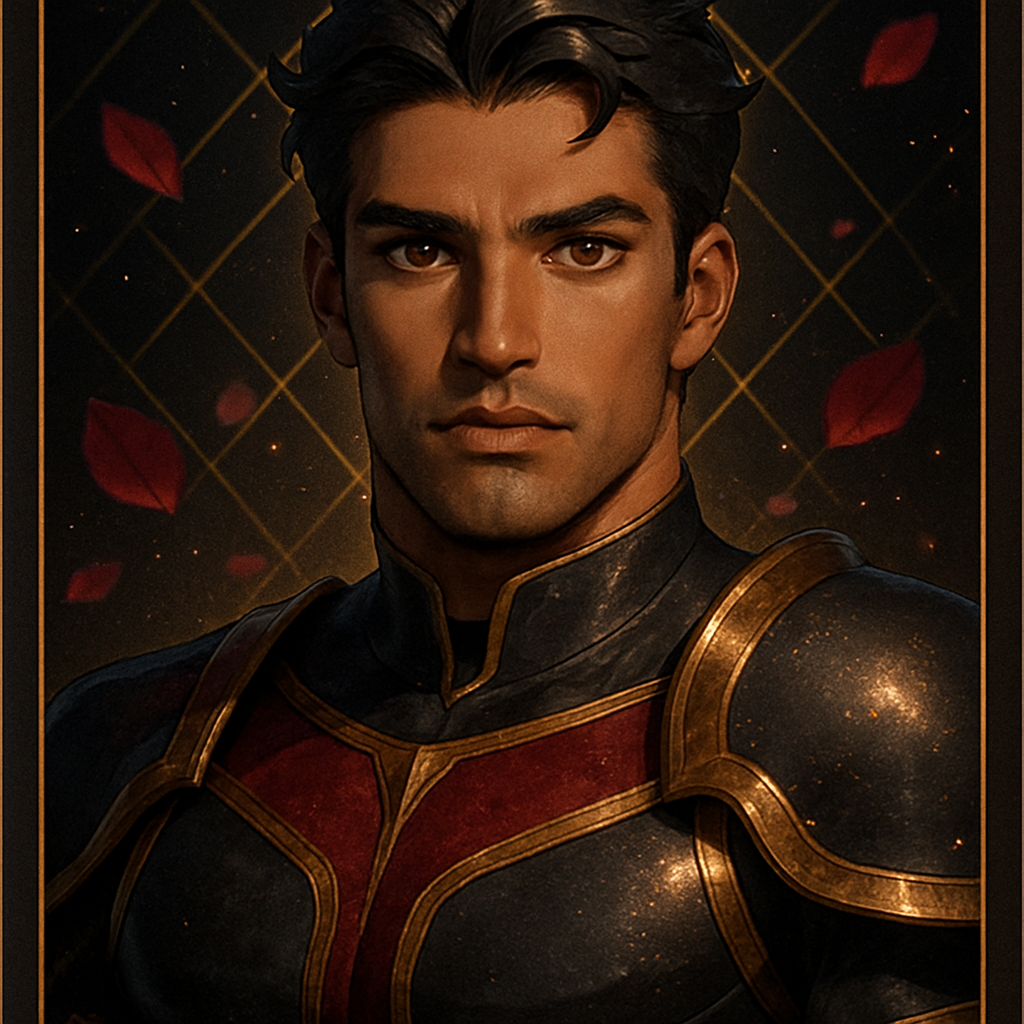
The Gladiator is one of the most psychologically interesting archetypes in BDSM roleplay, because its core tension is not the familiar one of weakness seeking safety but the far rarer one of strength choosing submission. This lesson establishes what the archetype is, where it comes from, and what makes it distinct from other submissive and service-oriented roles.
Strength as the starting point
The Gladiator archetype begins with a premise that inverts the way submission is often imagined: the person who submits is genuinely powerful. The classical gladiator was a trained fighter, physically capable, dangerous in combat, and celebrated in the arena. What made their situation erotically and dramatically charged was precisely the fact that outside the arena, they were owned. The champion who could defeat armed opponents belonged entirely to someone who might not be able to lift their sword.
In contemporary consensual dynamics, this inversion is the whole point. Placing real capacity, physical training, endurance, or genuine physical ability, under the direction of someone who holds structural authority rather than physical superiority creates a specific dynamic that weaker or more conventionally submissive partners cannot replicate. The submission carries weight because of what is being submitted. Strength offered freely is a rarer gift than strength taken by force.
This means that Gladiator dynamics are most fully realized by people who have a genuine relationship with their physicality: people who train, who have developed real capability, who have something specific to place under direction. The archetype is not a costume worn over any submissive orientation; it is a particular expression of submission that grows from a foundation of real physical self-possession.
Historical roots and their relevance
Rome's gladiatorial system was built on contradictions that still resonate. Gladiators were socially inferior, legally enslaved or condemned, and yet they were the most celebrated public figures of their era. Their physical perfection was admired and displayed; their sexual availability to the powerful who owned them was assumed; their courage in the arena was honored while their personhood outside it was denied. The gladiator occupied a unique position: simultaneously an object, a spectacle, a possession, and a figure of genuine cultural fascination.
This specific historical weight gives the archetype a gravity that purely fictional roleplay identities do not always carry. When practitioners draw on the Gladiator frame, they are engaging with something that genuinely existed, a real social structure built around the eroticization of strength and ownership. The Starz television series Spartacus, in particular, brought this explicit erotic dimension of gladiatorial culture into mainstream visibility and generated significant new interest in the archetype within kink communities.
The Gladiator is also not exclusively Roman. The 'owned warrior' archetype appears across cultures and periods: the captive samurai, the Norse thrall who had been a warrior, the war prize of many ancient traditions. Each carries its own aesthetics and specific historical weight, and practitioners sometimes blend or draw selectively from multiple traditions rather than committing to a single period.
How Gladiator dynamics fit within BDSM
The Gladiator sits at the intersection of three distinct BDSM dimensions: service submission, exhibitionism, and historical or fantasy roleplay. From service submission, it takes the orientation of placing one's capacity at another's disposal. From exhibitionism, it takes the display dimension, the gladiator who is readied, presented, assessed, and performed. From historical roleplay, it takes the specific aesthetic frame and the particular weight of historical reality.
This means that Gladiator dynamics can take quite different forms depending on which dimension is most central for a given practitioner. Some dynamics emphasize the service element, with the Gladiator performing physical tasks, demonstrating strength, or training under the direction of a Dominant who establishes their standards. Others center the display element, focusing on preparation rituals, aesthetic presentation, and the specific experience of being assessed and shown. Others prioritize the historical roleplay frame, with significant investment in period-accurate aesthetics and scenario construction.
In most cases, Gladiator dynamics involve an authority figure who holds structural power, a Dominant, Mistress, Master, or Goddess-type, rather than a physical combatant. The pairing is between a physically capable person in a submissive role and someone whose authority over them is social, relational, or positional rather than physical. This asymmetry is essential to the dynamic; if both parties are evenly matched in every dimension, the specific charge of the Gladiator archetype is lost.
What this archetype asks at the outset
People considering the Gladiator archetype benefit from asking themselves a specific question early: what is the strength they are placing under direction? This does not have to be literal physical training, though it often is. It might be an athlete's disciplined relationship to their body, a martial artist's practiced capability, a physically demanding profession, or simply a person who is large and physically capable in ways that make their submission genuinely significant rather than easily assumed.
The Gladiator archetype at its most realized is not a performance of strength. It is an expression of actual capability, directed by genuine choice toward someone whose authority over that capability is meaningful precisely because the capability is real. This distinction, between performing the archetype and genuinely inhabiting it, is worth sitting with from the very beginning of your engagement with the role.
Finally, the Gladiator is a submissive archetype, though it is an unusually powerful one. The direction of authority flows from the dominant partner outward. Understanding this clearly from the start prevents the confusion that can arise when physical capability is mistaken for relational authority. In the arena, the Gladiator is supreme. In the barracks, they belong to someone else. Both of these things are true at once, and holding both is the particular art of this role.
Exercise
Defining Your Strength
The Gladiator archetype begins with what is genuinely being offered. This exercise helps you get specific about the particular capability, discipline, or physical relationship that your version of this dynamic would draw on.
- Write down, in concrete terms, your genuine relationship with your physical self. This might be a training practice, a martial art, a sport, a physical job, or simply a considered relationship to your body's capability and endurance. Be specific rather than general.
- Write one sentence about what it would mean to place that specific capacity under someone else's direction. What would they be receiving? What would you be giving?
- Consider the historical or fictional versions of the Gladiator archetype that resonate most strongly with you, whether Roman, Japanese, Norse, or other traditions. Write down what specifically draws you to that frame.
- Write down one thing about the idea of being directed, displayed, or assessed by someone you trust that appeals to you, and one thing that feels uncertain or that you would want to explore carefully.
- Consider who the authority figure in your imagined dynamic would be: what kind of Dominant, and what specific quality of authority do they hold over you?
Conversation starters
- When you imagine strength offered in service rather than strength used for personal gain, what does that dynamic look like to you?
- What does the historical dimension of the Gladiator archetype mean to you, and how much does period specificity matter to how you want to inhabit this role?
- What is the relationship between your physical self and your sense of identity, and how does that shape what the Gladiator dynamic might mean for you?
- What kind of authority do you find most compelling in a dominant partner, and how does that relate to the particular tension of the Gladiator archetype?
- How do you think about the difference between performing strength in a scene and genuinely expressing a relationship you already have with your physical capability?
Ways to connect with a partner
- Share the concept of strength as the starting point for submission with a partner, and explore together what that specific kind of offering means to each of you in the dynamic.
- Discuss which dimension of the archetype, service, display, or historical roleplay, feels most central, and consider how a scene might be built that emphasizes the element you each find most compelling.
- Look at visual or historical material related to the Gladiator tradition together and identify the specific aesthetic elements that resonate and those that do not, building a shared picture of what your version of this dynamic might look like.
For reflection
What does it mean to you that the submission of someone genuinely capable is a more significant act than the submission of someone who has no choice, and how does that understanding change the way you think about what you are offering?
The Gladiator archetype is built on a real and historically rooted tension between power and ownership. The next lesson moves inward, to explore what this dynamic feels like from the inside and how you can recognize whether it genuinely fits who you are.