
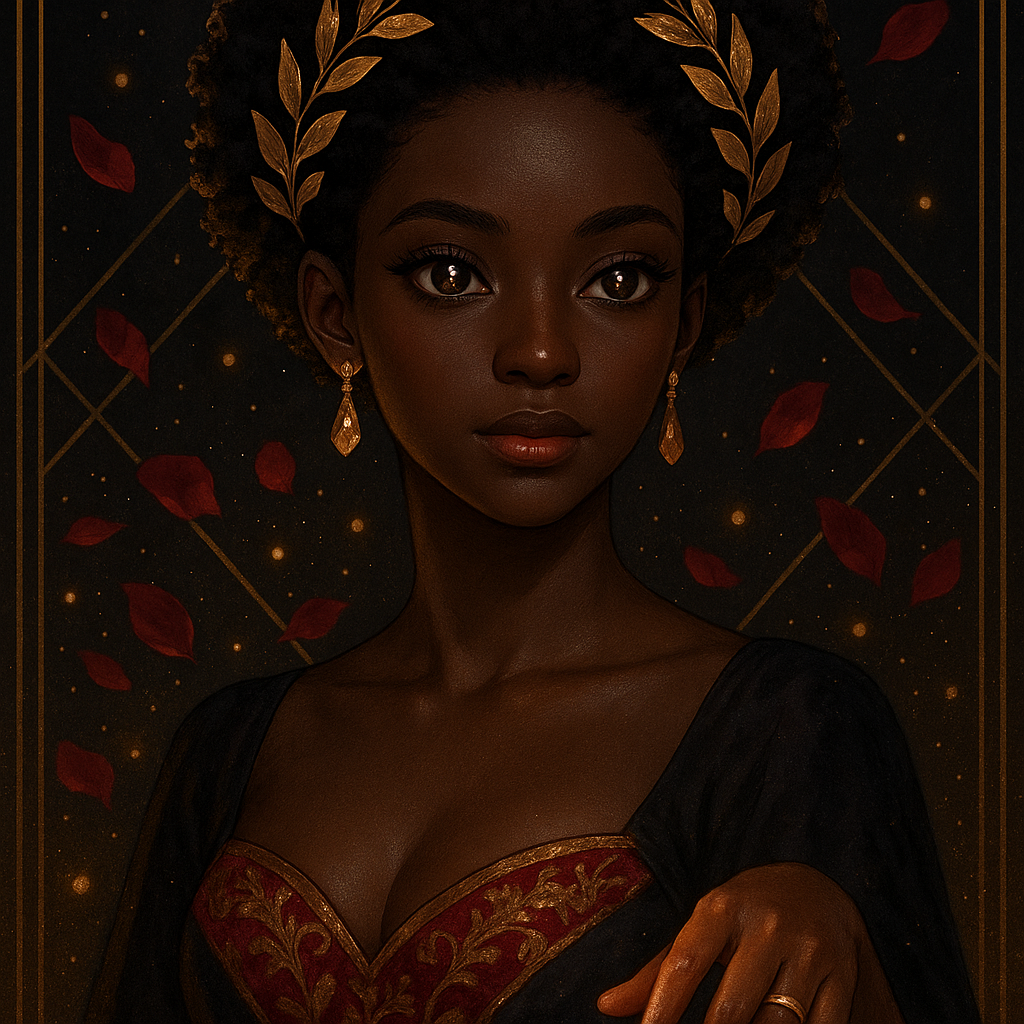
The goddess dom archetype occupies a specific and distinctive place within feminine Dominance: it is the archetype that centers elevation, devotion, and the sacred register of power. This lesson introduces what the archetype is, where it comes from, and what makes it distinct from other forms of dominant identity.
Worship as the Axis of the Dynamic
The goddess dom is a Dominant whose authority is rooted not in command or protocol but in elevation: she is worshipped, adored, and regarded with a quality of devotion that exceeds ordinary admiration. The submissive partner does not simply serve her; they devote themselves to her. This distinction, between service and devotion, between the practical and the sacred, is the defining characteristic of the archetype.
The dynamic operates in the register of the sacred rather than the merely formal. The language both parties use, the rituals they observe, and the emotional quality of their interactions all carry a different weight than in other power exchange dynamics. When a partner kneels before a goddess dom and genuinely means it, the experience for both people is not analogous to a submissive obeying a command; it is analogous to a moment of genuine reverence. Whether that reverence is understood in spiritual terms or purely as a powerful erotic and psychological framework varies from one person to another, but the quality of the experience is consistent.
The goddess dom receives worship as appropriate rather than as excessive. This is not arrogance in the ordinary social sense; it is a genuine orientation toward one's own power that does not require external validation to feel real. The goddess dom who has fully inhabited her archetype is not performing divinity; she is inhabiting a quality of authority that she has come to understand as genuinely hers.
Spiritual Dimensions and Cultural Roots
The goddess dom archetype draws on representations of divine feminine power across a wide range of traditions. Kali in Hindu theology, Aphrodite and Artemis in Greek mythology, Isis in Egyptian religion, and the varied expressions of goddess theology in contemporary spiritual feminism all provide cultural and symbolic resources that goddess doms draw on in different ways. Some goddess doms engage with these traditions as genuine spiritual frameworks; others use them as metaphors and aesthetic references without attributing religious meaning to them.
The archetype has significant presence in femdomme communities and in pagan and spiritual kink circles, where the intersection of the erotic and the sacred is taken seriously as a category of experience. In these communities, the goddess dom dynamic is not considered exotic or aberrant; it is recognized as one of several ways in which power exchange can operate in the register of genuine meaning-making.
Some goddess doms who work within explicitly spiritual frameworks consider their dominant practice a form of genuine spiritual work, not only a kink dynamic. For these practitioners, the devotion offered by a submissive partner is understood within a larger framework of sacred feminine power, and the dynamic is integrated into a broader spiritual practice. This orientation is one end of a spectrum, and many goddess doms relate to the archetype in a fully secular key, but the spiritual dimension is present enough in the community to warrant understanding.
Aesthetics and Cultural Presence
The goddess dom archetype has a distinctive visual and aesthetic language: elaborate attire, ceremonial settings, altars and offerings, the specific iconography of divine feminine power. On social media platforms, particularly Tumblr and Instagram, goddess dom content emphasizes beauty, ceremony, and the visual language of devotion. The aesthetic is rich, sensory, and often explicitly drawn from historical or mythological sources.
In contemporary popular culture, artists whose work engages goddess iconography explicitly have provided cultural reference points for the archetype. Beyonce's visual albums, particularly Lemonade and Renaissance, engage goddess imagery and unapologetic feminine power in terms that resonate with goddess dom communities. FKA Twigs's work, which explores ritual, beauty, power, and devotion in explicit visual and musical terms, is frequently cited in goddess dom discussions as culturally adjacent and relevant.
The archetype also has substantial presence in literary and philosophical sources. Mary Daly's theological writing informed a generation of women's exploration of sacred feminine power that shows up in goddess dom culture, and Clarissa Pinkola Estes's Women Who Run With the Wolves has a devoted readership in certain goddess dom communities. The goddess dom who is interested in the intellectual and spiritual dimensions of her archetype will find more written resources than most dominant archetypes have available.
How the Goddess Dom Differs from Related Archetypes
The goddess dom archetype has relationships with several other Dominant identities that are worth clarifying. The findomme archetype overlaps with it at the point where tribute and material offering are part of the dynamic, but the two archetypes are distinct in emphasis: the findomme's power is expressed primarily through financial control, while the goddess dom's power is expressed through elevation and devotion regardless of whether material tribute is involved.
The femdomme or dominant woman archetype is broader than the goddess dom and includes many orientations that do not operate in the sacred register. The goddess dom is one specific expression of feminine Dominance, not its only or most complete form. A femdomme whose dynamic is built primarily around protocol, or around sadism, or around service, may have little in common with the goddess dom archetype even if they share a gender identity.
The goddess dom is also distinct from what might be called a queen archetype, in which authority is expressed through sovereignty and command. The queen archetype is about legitimate rule; the goddess dom archetype is about something older and less rational than rule, the quality of devotion that certain kinds of power inspire. A queen expects obedience; a goddess receives worship, and the emotional register of those two experiences is quite different.
Exercise
Locating Your Relationship to Elevation
Before exploring the goddess dom archetype in practice, it is useful to understand your existing relationship to being elevated, adored, or treated as exceptional, because the archetype requires a particular capacity to receive that experience as real.
- Write down a specific experience in which someone treated you with genuine admiration or devotion. It does not need to be a kink context: a time when someone looked at you as though you were remarkable. How did you respond, internally and externally?
- Notice whether you accepted that admiration as appropriate or deflected it. Write one honest sentence about your relationship to being treated as exceptional.
- Think about what it would mean to receive devotion as simply what you are owed, without deflecting, minimizing, or performing humility. What comes up when you consider that?
- Write down one quality about yourself that you genuinely regard as extraordinary, not because you are supposed to think well of yourself but because you have evidence. Practice stating it plainly.
Conversation starters
- What is the difference, for you, between being admired and being worshipped? Does the distinction feel meaningful or overdrawn?
- Have you encountered the goddess dom archetype in a spiritual or a secular context? What was your response to it?
- Which specific cultural or mythological goddess figures, if any, resonate with you and why?
- What makes the quality of devotion different from the quality of service as a submissive experience?
- Where do you think the line is between inhabiting an archetype of divinity with genuine self-knowledge and performing it as a costume?
Ways to connect with a partner
- Ask your partner what the word 'worship' brings up for them, whether they have experienced it, what it would feel like to offer it genuinely.
- Share a piece of art, music, or mythology that captures the goddess dom aesthetic as you understand it, and discuss what it brings up for each of you.
- Talk about the difference between a power exchange that operates in a sacred register and one that operates in a formal or playful register. What would each feel like from each of your positions?
- Discuss whether a spiritual framework is something that interests either of you in this context, or whether the archetype's appeal is primarily erotic and psychological for you both.
For reflection
Think about a moment in your life when you felt most fully yourself, most completely powerful in a way that required no performance. What was present in that moment?
The goddess dom archetype begins in a particular quality of self-knowledge, the ability to inhabit one's own power without apology or deflection. Every other element of the dynamic builds on that foundation.