
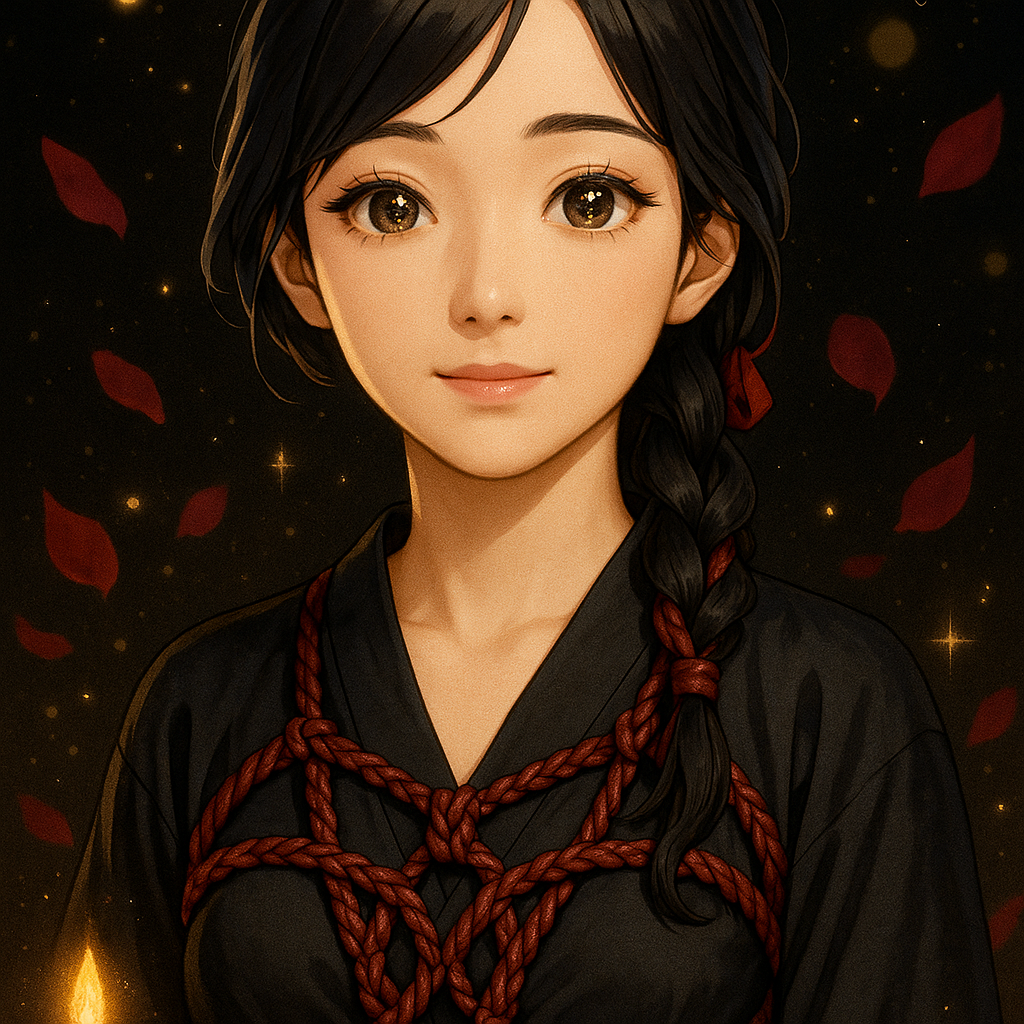
The rope bunny occupies a unique position in kink: a role defined not by a relationship to power as such but by a relationship to a specific physical practice. The experience of being tied, of feeling rope against skin and movement progressively restricted, is the central element, and the rope bunny is the person who seeks, loves, and is shaped by that experience. This lesson establishes what the rope bunny role actually involves and where it sits in BDSM culture.
What It Means to Be a Rope Bunny
A rope bunny is someone who loves being tied. The desire is specific and concrete: the texture of rope against skin, the progressive restriction of movement as ties are added, the visual of the work taking shape on their body, and the particular altered state that deep bondage can produce. These elements combine into an experience that many rope bunnies describe as unlike anything else they have found in kink or outside it.
The term 'bunny' came from the soft, curled quality of someone fully folded into rope, especially in Japanese-influenced suspension bondage, and the community embraced it for its warmth and specificity. It is distinct from 'rope model,' which carries connotations of professional or aesthetic work, and from 'bottom' in the general kink sense, though the roles overlap. Being a rope bunny specifically centers the rope as the defining element rather than submission, sensation, or aesthetics alone, though any or all of these may be present.
Rope bunnies vary significantly in what draws them to the practice. Some are primarily aesthetic, drawn to shibari as a visual art form and to the experience of being the living medium for that art. Some are sensation-focused, seeking the specific physical pressure and containment of rope. Some are psychological, finding in the helplessness of being tied something that allows them to release control in a way nothing else quite achieves. Most experienced bunnies are some combination of all three, and what is most salient on any given day can shift.
The Range of What Bunnies Seek
One of the more important things to understand about rope bunnies is the breadth of the category. A person who wants to lie in a simple single-column ankle tie and experience the weight and texture of hemp against their skin is a rope bunny. A person who seeks the physical and psychological intensity of full suspension in an elaborate shibari harness is also a rope bunny. The desire for rope is what they share; everything else varies considerably.
Some bunnies are also submissives in a broader dynamic and experience rope as an expression of that submission. For these practitioners, being tied is an act of yielding to a dominant's authority, and the rope is the physical medium through which that authority is made concrete. Others are what the community calls 'rope-only' or 'bondage-only' bottoms who love being tied but have no interest in broader power exchange, who may top in every other context and consider rope a specific practice quite separate from their dominant-side activities.
Rope bunnies also vary in their relationship to the rigger. Some seek an ongoing practice with a single rigger they know deeply, building trust and knowledge over time into something that produces the most profound experiences. Others enjoy working with multiple riggers, experiencing different tying styles, aesthetics, and energies as part of their exploration of what rope can be. Both approaches are legitimate, and the best approach depends on what the individual bunny is actually looking for.
Rope Space and What It Feels Like
One of the most discussed aspects of rope bunny culture is rope space, the altered state of consciousness that deep bondage can produce. Bunnies describe it in various ways: as floating, as meditative, as a sudden disappearance of the internal noise that usually accompanies waking consciousness, as a profound peace. It is widely considered by those who have experienced it to be among the most altered and most peaceful states achievable through kink, comparable in some respects to the deep states produced by meditation practices.
Rope space does not arrive on demand and does not arrive in every session. It requires a certain depth of trust between bunny and rigger, a certain quality of physical presence, and often a certain amount of time in the rope before it settles in. Some bunnies report it arriving consistently in certain conditions and rarely or never in others. Understanding your own patterns around rope space, what invites it and what prevents it, is part of the self-knowledge that experienced bunnies develop.
Because rope space involves a genuine shift in consciousness, bunnies in it are in a vulnerable state that requires careful management from both parties. Communication may become more difficult; the bunny's capacity to assess their own physical state may be reduced; time may feel distorted. Skilled riggers learn to recognize rope space in their bunnies and to manage the session accordingly, maintaining safety without disrupting the state unnecessarily.
Where Rope Bunnies Fit in BDSM Culture
Rope bondage has one of the richest cultural traditions in kink, drawing on Japanese kinbaku and shibari practice that has its own centuries-long history, on Western-style rope traditions, and on the contemporary fusion scene that has evolved from both. Photographers, artists, educators, and performers have built around rope bondage a world of aesthetic and philosophical seriousness that distinguishes it from most other kink practices in the breadth of its community infrastructure.
Events like Shibaricon and various rope jams draw rope practitioners from across the community in numbers that reflect how central rope has become to contemporary kink culture. Organizations and studios, including Anatomie Studio and The Rope Lab, provide spaces specifically dedicated to rope practice and education. Online communities on FetLife and beyond produce rich ongoing discussion about technique, safety, aesthetics, and the philosophy of the practice.
Within this culture, bunnies are active participants rather than passive subjects. The rope bunny community has developed robust safety culture, including advocacy for quick-release skills among riggers, normalization of position-change requests mid-scene, and detailed shared knowledge about nerve pathways, circulation risks, and the management of rope drop. Bunnies who are involved in these communities tend to develop faster and more safely than those who practice in isolation.
Exercise
Rope Bunny Orientation Exercise
Use these prompts to develop a clearer picture of your own relationship to the rope bunny experience.
- Write about what specifically draws you to rope, being as concrete as possible about whether the primary draw is sensation, aesthetics, psychology, altered state, or some combination.
- Consider whether you are drawn to rope within a broader power-exchange dynamic or as a practice somewhat separate from power exchange. Write about what the difference means for what you are looking for.
- If you have been tied before, write about the most significant experience you remember: what made it significant, and what it taught you about what you actually want from rope.
- If you have not been tied, write about what you imagine a first session being like: what you hope to feel, what you are uncertain about, and what you would need to feel safe enough to be fully present.
Conversation starters
- Can I describe what draws me to rope specifically, so you understand what I am looking for beyond the general category of bondage?
- What is your experience with rope as a practice? I want to understand where you are coming from before we talk about what we might explore together.
- Have you encountered rope space before, either in yourself or in someone you have tied? I want to understand your familiarity with that aspect of deep bondage.
- What does rope mean to you as a practice, beyond the technical? I want to understand the orientation you bring to it.
Ways to connect with a partner
- Share your answers to the orientation exercise with your rigger so they have a specific picture of what you are seeking, not just what you are willing to try.
- Ask your rigger what they find most meaningful about tying and what they are most interested in exploring; knowing their orientation helps you understand what sessions you are building together.
- Identify together one resource about shibari or rope bondage culture that you could explore jointly, building shared context for the practice.
For reflection
What is the specific thing you are looking for in rope that you have not found, or found only partially, in other forms of kink or intimacy?
Understanding what rope is and what draws you to it specifically is the foundation for building a rope practice that actually provides what you are seeking. The more specifically you know your own draw, the more clearly you can seek it.