
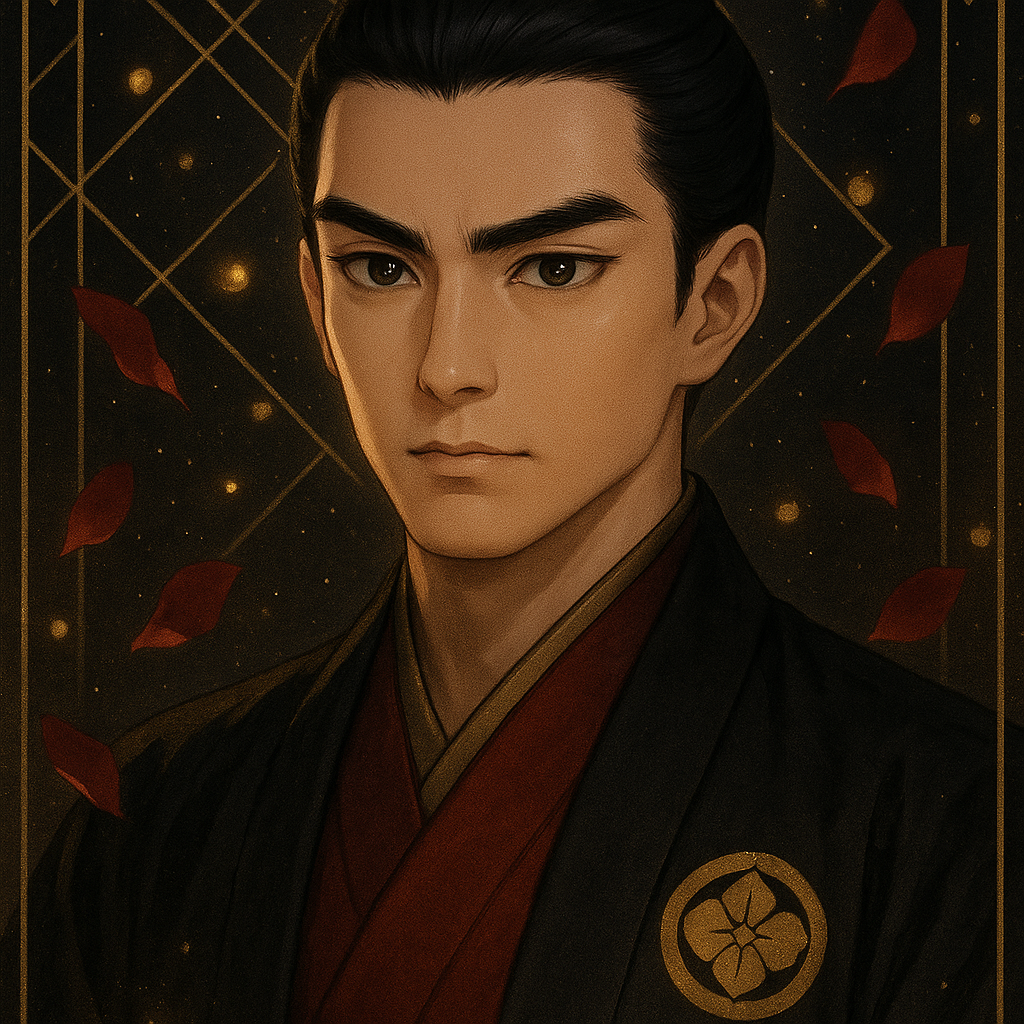
The Samurai archetype is one of the most ethically rich and psychologically serious frameworks available within BDSM roleplay and power exchange. This lesson establishes what the archetype is, what traditions it draws on, and what distinguishes it from other service-oriented roles in ways that matter both aesthetically and relationally.
The code that is not imposed
The defining feature of the Samurai archetype within BDSM is not loyalty, not ritual, and not the Japanese historical frame, though all of these are present and significant. It is the internalized code. Bushido, the warrior's way, is not a set of rules handed down by an external authority that the samurai obeys because they must. It is a framework that the samurai carries as their own, an ethical structure that they have internalized deeply enough that departing from it feels not like disobedience but like a failure to be themselves.
In BDSM practice, this distinction is fundamental. Most service-oriented submissive roles involve responding to external direction: the submissive does what the Dominant asks, to the standard the Dominant sets. The Samurai does this too, but they bring to it an additional dimension: their own deeply held standards for the quality and integrity of their service. They are not simply meeting the lord's requirements; they are serving according to their own code, which demands more than any external requirement typically would. The lord benefits from this, but it is not the lord who created the standard.
This makes the Samurai's submission qualitatively different from compliance. A submissive who complies does what they are told. A Samurai serves in accordance with what they believe service should be. The distinction produces a dynamic of unusual depth and reliability.
Historical and cultural roots
The samurai class in Japan developed over several centuries as a warrior caste with a distinctive ethical tradition, reaching its most articulate expression in the Edo period through texts like the Hagakure and the writings of Miyamoto Musashi. The concept of bushido as it is commonly understood today is partially a 19th and 20th-century articulation of these traditions, rather than a purely historical formation, but the underlying values, loyalty to one's lord, precision in craft, acceptance of mortality, honor above convenience, are deeply embedded in Japanese cultural history.
The Hagakure's most famous line, that the way of the samurai is death, is not a counsel of literal self-destruction but a statement about radical commitment: a samurai who has resolved to give everything to the way is freed from calculation and hesitation. In BDSM dynamics, this quality of total commitment, the samurai who has resolved to serve with everything they have rather than calibrating their effort to what is strictly required, is the specific gift the archetype offers.
For many practitioners, genuine investment in Japanese cultural and historical knowledge is part of the archetype's appeal. The tea ceremony, calligraphy, kendo, the aesthetic tradition of wabi-sabi, the poetry of Basho: these are touchstones that some practitioners bring into their dynamics as genuine enriching elements rather than as decoration. Others hold the archetype primarily as a psychological and relational framework with minimal historical specificity. Both approaches are legitimate; the internalized code is the essential element regardless of the aesthetic surround.
How Samurai dynamics fit within BDSM
The Samurai sits most clearly within the service submission dimension of BDSM, but it is a distinctively high-protocol, ethically grounded expression of that dimension. The service-sub does what is asked with care and attentiveness. The Samurai does what is asked according to their own high standard of what service should be, which typically means more preparation, more precision, and more genuine investment than service submission's baseline.
The archetype also has a strong element of loyalty dynamics: the commitment to a specific lord rather than to service as an abstract practice. This specificity, the fact that the Samurai's loyalty is directed toward a particular person and relationship rather than to service in general, is important. It means that Samurai dynamics are typically ongoing relationships rather than scene-by-scene arrangements, and that the quality of the lord matters as much as the Samurai's own commitment. A Samurai without a lord worthy of their loyalty is in an unsatisfying and ultimately unstable position.
Protocol dynamics, with their emphasis on specific rules, forms of address, and behavioral expectations, are close relatives. Samurai practice often incorporates formal protocols, but the frame is different: protocol dynamics tend to be externally imposed by the Dominant, while Samurai dynamics emerge more from the Samurai's own standards as they are shaped by the relationship with their lord. The overlap is significant, but the starting point is different.
What the Samurai archetype is not
Several common misunderstandings are worth addressing early. The Samurai archetype does not require either partner to be Japanese, to have studied Japanese culture extensively, or to incorporate any specific historical elements. The core of the archetype is the internalized code and the quality of committed, precise service. These can be expressed with strong Japanese aesthetic investment or with almost none; the psychological and relational substance is what matters.
The Samurai is also not simply a strict, protocol-heavy submissive with a Japanese aesthetic. The distinguishing element is the code, and the code means that the Samurai's submission is not primarily responsive. It is principled. A Samurai who is directed to do something that violates their code has a genuine internal conflict to navigate, and how they navigate it, typically through honest conversation rather than either silent compliance or unilateral refusal, is characteristic of the archetype's maturity.
Finally, the Samurai is a submissive role, and one of profound depth. The lord holds genuine authority in the dynamic, and the Samurai's service is genuine service. The code and the standards the Samurai carries are in service to the lord and the relationship, not a form of hidden dominance. The most common confusion is mistaking the Samurai's internal authority, their own standards and code, for relational authority over the dynamic. These are distinct, and the Samurai understands the difference.
Exercise
Articulating Your Code
The Samurai archetype begins with a code that is yours rather than externally imposed. This exercise helps you begin to articulate what that code actually is for you.
- Write down three values that you hold about what good service actually looks like. Be specific and concrete rather than general: not 'I care about quality' but what specific qualities of care, attention, or precision matter to you.
- Write about a time when you maintained your own standard for something even when no one would have noticed or required it. What drove that, and what did it feel like?
- Consider the historical or cultural elements of the Samurai tradition that resonate with you. Write one sentence about which dimension, the ethical code, the aesthetic tradition, the specific historical period, or the relational loyalty, is most central to your engagement with the archetype.
- Write one sentence describing what you mean by loyalty as a practice. The Samurai tradition insists that loyalty is not a feeling but a daily practice; what would that look like, concretely, in your life?
- Write about what a lord worthy of your loyalty would be like. Be specific about what qualities they would need to have, and what that tells you about what you are looking for in a Dominant partner.
Conversation starters
- What does the concept of an internalized code, as distinct from externally imposed rules, mean to you, and how does it show up in how you already live?
- How does the Samurai archetype address something that other submissive identities did not fully capture for you?
- What aspects of Japanese history or culture are genuinely meaningful to you in this context, and what is primarily aesthetic backdrop?
- What would it mean for a Dominant to be worthy of the specific loyalty the Samurai tradition describes?
- How do you understand the relationship between the Samurai's own code and the authority of their lord, when those two things might point in different directions?
Ways to connect with a partner
- Share the concept of the internalized code with a prospective partner and explore together what it would mean for you to bring your own standards to the service you offer, and what that asks of them as the lord who receives it.
- Discuss the historical or cultural dimension of the archetype and establish a shared understanding of how much aesthetic specificity you both want to incorporate.
- Explore what qualities a partner would need to have, in your specific view, to be worthy of the kind of loyalty the Samurai tradition describes, and discuss whether those qualities are present in the dynamic you are considering.
For reflection
What would your code look like, written out in its essential elements, and what does the existence of that code tell you about who you already are?
The Samurai archetype begins with the code, and the code begins with knowing what you actually hold yourself to. The next lesson moves inward, to explore what this dynamic feels like from the inside and what it asks of you as a person before it asks anything of you in a scene.