
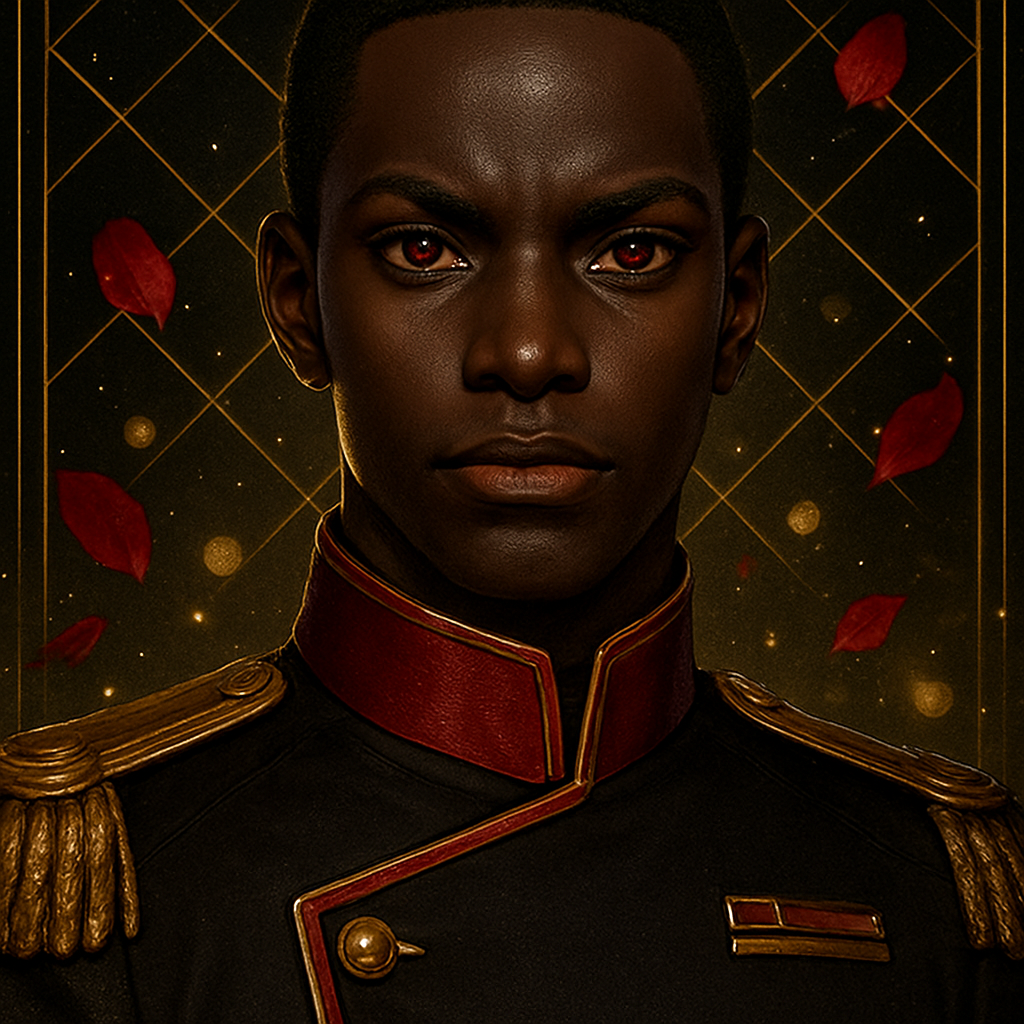
The Commander archetype attracts a particular kind of person, and understanding what draws them to it, what it feels like from inside the persona, and what genuine fit with the role looks like, helps you find your way to the version of it that is actually yours.
What Draws People to the Commander
People who are genuinely drawn to the Commander archetype often share certain qualities. Many have a natural orientation toward decisive leadership in their everyday lives and find that the Commander persona gives them access to an expression of that orientation that is more complete, more theatrical, or more explicitly satisfying than what everyday contexts allow. Others are drawn specifically by the fictional dimension, the pleasure of inhabiting a character in a rich world, in a way that combines creative expression with genuine power exchange.
The Commander archetype also attracts people who find the procedural and structured quality of military or command scenarios satisfying in itself. There is something genuinely pleasurable, for the right person, about the precision of rank and protocol, about scenes that have internal logic and procedural integrity, about the specific discipline of holding a character's composure through changing circumstances. This is distinct from the appeal of dominance more broadly; it is a specific aesthetic and structural preference.
Many Commanders describe a sense that the archetype gives them access to a kind of authority that feels both genuine and clean: genuinely felt but clearly fictional, which allows them to inhabit it fully without the complications of real-world authority claims. The fictional frame is not a limitation; it is what makes the depth of immersion possible.
What It Feels Like from the Inside
When a Commander is in scene, the experience is often described as a specific kind of focused presence: the character's certainty and control become genuinely felt, not merely performed. This is one of the distinctive qualities of archetype-based kink play. The persona, when it is working, does not feel like a costume; it feels like a mode of being that is genuinely available to you and that produces its own psychological rewards.
Maintaining the Commander's composure through a scene requires real self-regulation. When a partner is resisting, escalating unexpectedly, or doing something that the character would need to respond to in a specific way, the Commander who has genuinely internalized their own standards can draw on the character's logic rather than improvising from scratch. This is why practitioners who invest in character development tend to have much more immersive scenes: the character is real enough to be a resource, not just a role.
The experience of inhabiting the character fully can be deeply satisfying in itself, in a way that is related to but distinct from the D/s power exchange dimension. Commanders often describe a kind of pleasure in the craft of it, in executing the persona well, that is present even in scenes where the explicit power dynamic is secondary to the theatrical quality.
Recognizing Genuine Fit
The Commander archetype is a genuine fit for you if the prospect of inhabiting this kind of authority structure, within a fictional frame, produces genuine enthusiasm rather than obligation. That means looking forward to the world-building as well as the scenes, finding real pleasure in the specificity of the persona and not just the power exchange, and feeling something that can be fairly described as character love for the Commander you are developing.
Genuine fit also shows up in how the archetype performs under the pressures of an actual scene. A Commander who has real fit with the archetype maintains their composure not through effort but because the character's composure is genuinely available to them. When the persona holds under pressure in a way that surprises the practitioner themselves, that is a signal of genuine fit rather than performance.
- The Commander archetype attracts people with a genuine orientation toward structured authority, precision, and the specific pleasures of inhabiting a well-developed character.
- When the archetype is working, the persona produces its own genuine psychological rewards, distinct from but related to the D/s dimension.
- Character development is not a preliminary to Commander play; it is part of what makes the scenes work.
- Genuine fit with the archetype shows up as enthusiasm for all dimensions of the role, not just the power exchange.
The Commander in Everyday Life
Many Commanders notice that their relationship to everyday authority and leadership is inflected by their kink archetype in interesting ways. The composure practice, the preference for clarity and precision, the orientation toward decisive action under uncertainty: these are qualities that tend to appear in how Commanders approach their work and relationships outside of scenes as well. This is not a problem; it is simply the nature of deep character identification.
The important thing is that the Commander persona remains a choice that is made within specific contexts, not an identity that is imposed on everyone in the practitioner's life regardless of context or consent. The care and thoughtfulness that distinguish a Commander who genuinely understands their archetype from one who is simply using the fiction to claim authority without accountability are the same qualities that make the kink practice meaningful.
Exercise
Character Depth Interview
This exercise develops your Commander character beyond their rank and setting, into the specific personality and history that makes them genuinely inhabitable.
- Answer each of these questions in the voice of your Commander: What is the worst decision you have ever made in the field, and what did you learn from it? What do you require from the people under your command, and why? What is the one thing you would never order someone to do?
- Write a brief scene, three to five sentences, in which your Commander must deliver unwelcome information calmly. This is a composure drill; the content of the information matters less than the quality of the delivery.
- Identify one quality your Commander has that you, as the person playing them, do not naturally possess. Practice accessing that quality in a low-stakes context outside of scenes.
- Ask yourself honestly: what is genuinely mine in this character, and what am I borrowing from a fictional source? The genuine parts are your foundation; the borrowed parts are useful as long as they do not prevent you from making the character your own.
Conversation starters
- What does it feel like when the Commander character is really working, when you are genuinely in it rather than performing it?
- Is there a specific fictional Commander whose quality of authority you find yourself drawing on? What is it about them that resonates?
- How do you manage the composure requirement when a scene goes in an unexpected direction?
- What does your partner's experience of your Commander look like from the inside? Have they described what it is like for them?
Ways to connect with a partner
- Ask your partner to describe in specific terms what your Commander archetype feels like from the other side. What works best? What would they want more of?
- Share the character depth interview answers with your partner and invite them to ask follow-up questions as if they were in the world. This kind of character conversation deepens the shared fiction.
- Talk about what your partner's role is in relation to the Commander character: who are they in the world? Developing their in-world identity, even loosely, enriches the scene logic.
For reflection
What does inhabiting the Commander character give you access to that other modes of engaging with power exchange do not? Be as specific as you can.
The inner world of the Commander is the engine of everything the scenes produce. The next lesson moves to the specific skills the role demands: how to build the persona, manage the composure, and construct scenarios that hold.