
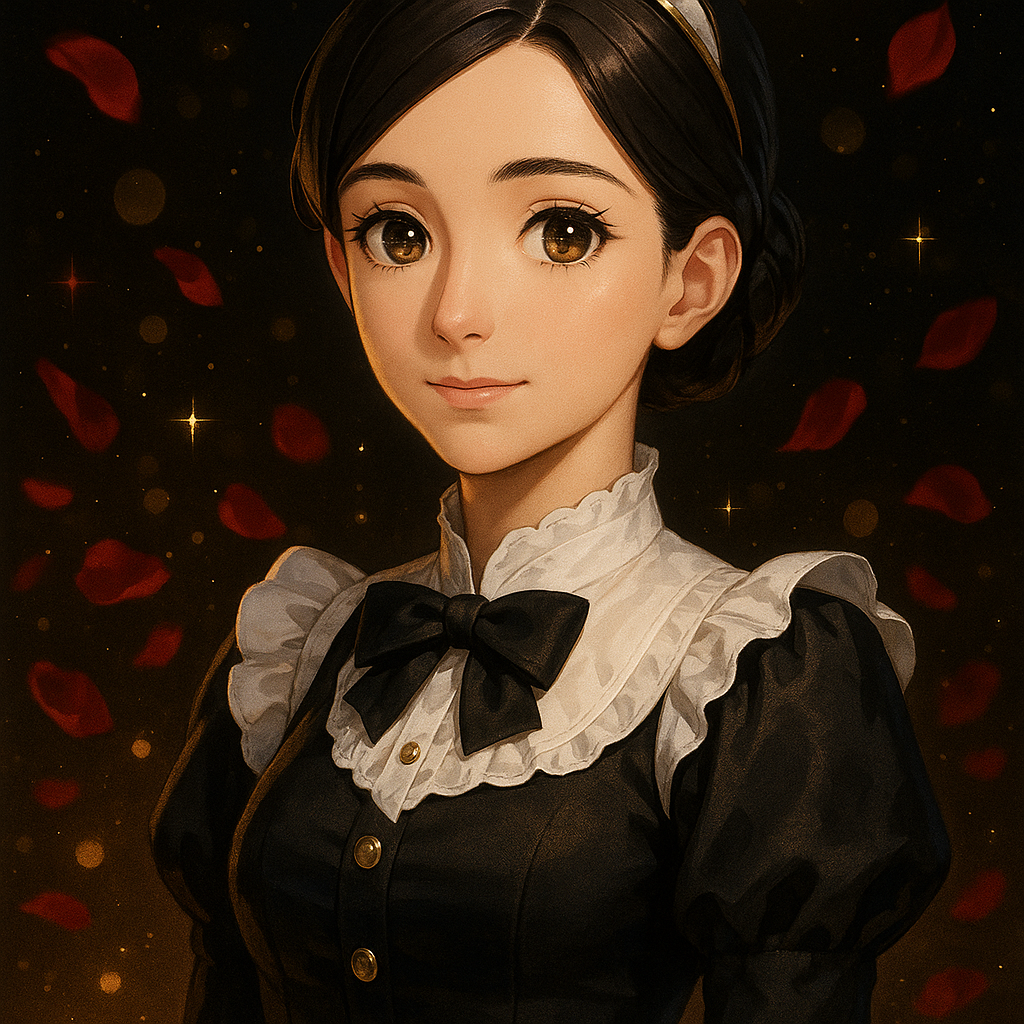
The Maid role is more demanding than it might appear from the outside. Performing domestic service with genuine care, attention to detail, and sustained aesthetic investment, within a formal protocol structure, is skilled work that develops over time. This lesson addresses the specific skills and mindset the role requires.
Attention to detail as a practice
The defining skill of the Maid role is attention to detail: the ability and the orientation to notice what others might overlook, to hold a standard of quality that goes beyond adequacy toward genuine excellence, and to find the effort of maintaining that standard rewarding rather than exhausting. This attention is not purely technical; it is partly a cultivated orientation toward the work, a relationship with domestic craft that treats it as something worth doing with genuine care.
Developing this attention requires practice and intentionality. A Maid who approaches their service tasks as a practice, who pays attention to the quality of their work not only when the Dominant is watching but as a continuous standard they hold themselves to, develops a relationship with their craft that becomes genuinely sustaining. The satisfaction of a perfectly ordered surface, a precisely arranged object, or a room that has been genuinely transformed by care is not imaginary; it is a real aesthetic and psychological experience that rewards the attention invested in producing it.
Attention to detail also extends to the Dominant's preferences: what they value, what they notice, what specific standards matter to them, and what the household's particular protocols require. Learning these with genuine care and applying them consistently is itself a form of attentiveness that demonstrates submission through knowledge rather than only through action.
Service craft
Service craft is the practical skill dimension of the Maid role: the actual ability to clean effectively, to organize with a clear system, to prepare and present objects and spaces in ways that are genuinely good rather than merely adequate. This is worth taking seriously, because service that is performed with genuine quality is a different thing from service that is performed within the form of the role but without the substance of real care.
Developing service craft means learning what good domestic work actually looks like: how different surfaces are cleaned without damage, how spaces are organized in ways that are both aesthetically pleasing and genuinely functional, how service is timed and sequenced in ways that make the whole more than the sum of its parts. For people who have not previously invested in developing these skills, doing so within the context of the Maid role can be a genuinely interesting process, because the role gives the skill development a specific purpose and a specific evaluative framework.
Presentation skills are a specific component of service craft: the ability to set a table properly, to serve correctly, to present objects to a Dominant in ways that are both beautiful and appropriate to the protocol. Many Maid dynamics have specific protocols around how service is delivered, and learning those protocols accurately is itself a demonstration of submission through attention.
Protocol and uniform as psychological tools
The uniform and the protocols of the Maid role serve both aesthetic and psychological functions, and understanding both helps in using them well. The uniform is not merely a costume; it is a signal to both the wearer and the Dominant that the role is active, that the specific relationship of the dynamic is in place, and that the standards and expectations of that dynamic apply. Many Maids find that the act of putting on the uniform is itself a transition that shifts their internal state in ways that no verbal cue achieves as reliably.
Protocols function similarly. A protocol, such as a specific way of addressing the Dominant, entering a room, presenting an object, or completing a specific service sequence, is a recurring structure that each performance reinforces. The consistency of the protocol is part of its function: it makes the submission visible and concrete, gives the Dominant something specific to evaluate, and gives the Maid a clear standard to meet. Protocols that are designed well serve all of these functions simultaneously.
The Maid who understands their uniform and protocols as psychological tools rather than only as rules will use them more deliberately and will find them more reliably productive. Dressing with care, performing protocols with attention rather than mechanical repetition, and regarding each service act as its own expression of the role rather than a step in a routine produces a qualitatively different experience of the dynamic.
The mindset of genuine investment
The most distinctive mindset element the Maid role asks for is genuine investment in the quality of the work rather than only in the performance of submission. A Maid who is invested in their role has their own standards of excellence that they are meeting, in addition to the standards the Dominant has established. The work is not only a demonstration of obedience; it is an expression of a specific aesthetic relationship with the space and with the act of care itself.
This internal relationship with the craft is what differentiates service that feels genuinely submissive and satisfying from service that feels like compliance. When the Maid's standards are genuinely their own, and when meeting those standards produces its own satisfaction independent of the Dominant's response, the role becomes self-sustaining in a way that external-approval-only dynamics cannot be. The Dominant's evaluation remains important and meaningful, but it is not the only source of the experience's value.
Developing this internal relationship with the craft takes time and requires genuine curiosity about what excellent service actually looks like. Maids who approach this development with genuine interest, who read about and observe and practice service craft in ways that build real knowledge, find that their submission deepens as their craft improves. The two grow together.
Exercise
Building Your Service Craft
This exercise asks you to examine and develop the specific skills the Maid role requires, starting from where you currently are.
- Choose one specific domestic service task that would be part of your Maid role: cleaning a particular surface, arranging objects, setting a table, or another task specific to your dynamic. Write down what genuinely excellent performance of that task looks like, in concrete terms.
- Write down one aspect of your service craft that you want to develop, and one specific action you will take to develop it before your next scene or service session.
- Write down the protocol you most want to have in your Maid dynamic: a specific, recurring way of doing something that would give the service visible form and give you a consistent standard to meet.
- Write one sentence about what you want your internal experience of service to feel like when the role is working well, as distinct from what you want the Dominant's response to be.
Conversation starters
- What specific standard of service quality is most important to you in my Maid role? I want to understand what you are evaluating so I can direct my investment toward it.
- Are there particular protocols you want to establish for specific service tasks? I find that clear, consistent protocols help me inhabit the role more fully.
- What does excellent service look like to you, in the specific domestic context of our dynamic? What would tell you that I had genuinely met your standard?
- What is the relationship between the aesthetic dimension of the role, the uniform and the presentation, and the actual service work, for you? Which matters more when there is tension between them?
Ways to connect with a partner
- Ask your Dominant to teach you a specific protocol that is important to them, so that you learn it directly from them rather than approximating it, and practice it together until it feels natural.
- Run a practice service session with explicit feedback from the Dominant at the end: what they noticed, what met the standard, and what they want you to work on. Use this as a calibration rather than a performance.
- Discuss together what the uniform means in your specific dynamic: when it is worn, what it signals when it goes on and comes off, and what it communicates to both of you about the state of the role.
For reflection
What would it mean to meet your own standards of excellent service, independent of whether the Dominant notices? What would that internal experience be like?
The skills the Maid role requires are specific and genuinely learnable, and developing them with real investment produces a quality of service that is satisfying for both the Maid and the Dominant in ways that going through the motions cannot match. The next lesson turns to the conversations that establish this dynamic.