
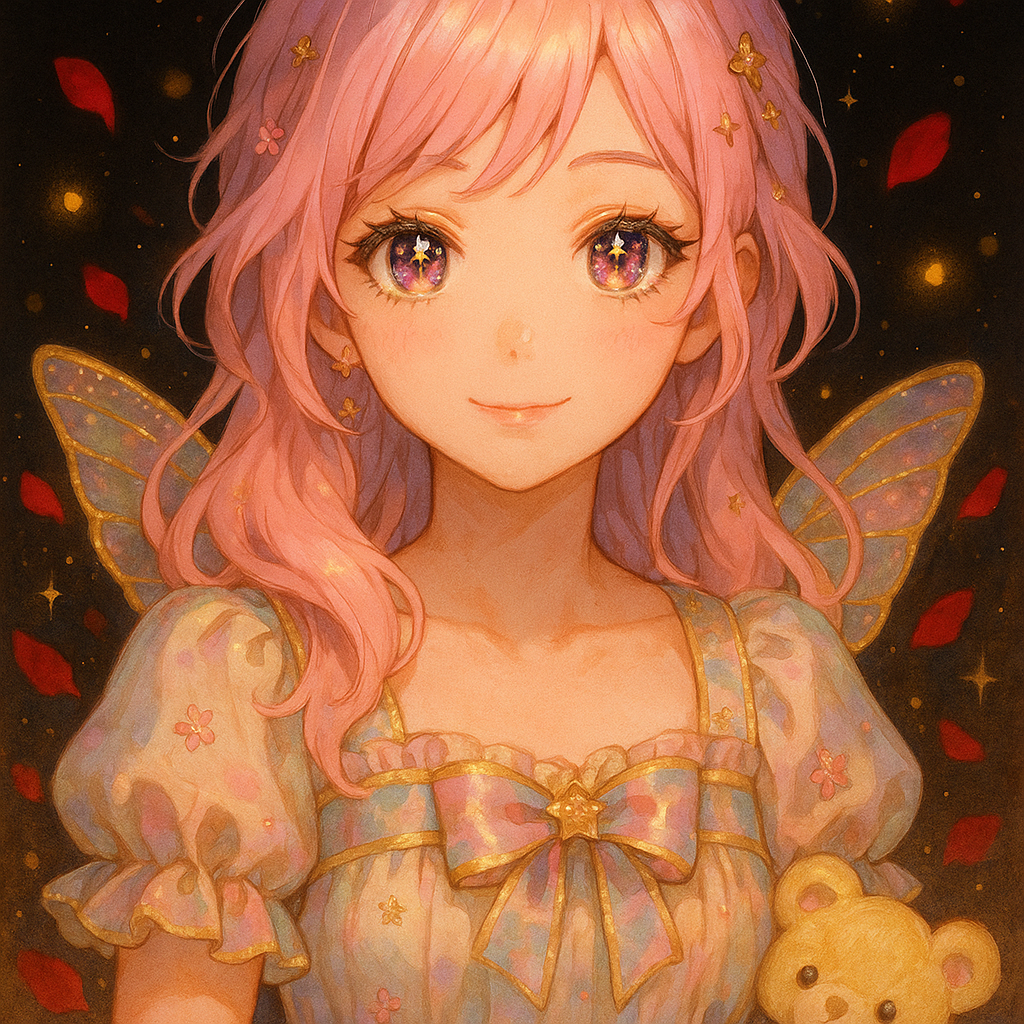
Fairy dynamics come to life in practice through scenes that honor both the enchanting quality of the archetype and the real relationship between two actual people. This lesson covers the specific rituals, scene structures, and first steps that allow fairy energy to operate at its best.
Rituals That Work for Fairies
Rituals in fairy dynamics serve a different function than they do in more protocol-heavy dynamics like the Elf or formal Dominant archetypes. Where protocol rituals often emphasize consistency and precision, fairy rituals tend to center on entry and return: ways of marking the beginning of the scene, ways of returning to the partner after a lateral move, and ways of acknowledging the end of the scene that feel genuinely in the spirit of the archetype.
A scene-opening ritual for a fairy dynamic might be as simple as putting on wings, performing a specific gesture, or adopting a particular mode of speaking that signals the beginning of fairy space. The function of the opening ritual is less about establishing protocol and more about giving both parties a clear moment of entry into the fiction. For the fairy, it can also function as a permission structure: a deliberate act of stepping into the archetype fully rather than bringing fairy energy into an ordinary interaction without either party having chosen that.
Return rituals, specific ways of coming back to full presence with a partner after a lateral move, are particularly valuable in fairy dynamics because they address the archetype's specific growth edge: sustained presence. A return point can be as simple as a specific touch, a particular word, or a direct look that is acknowledged and received. Both parties should know what this looks like in advance, so that it reads as genuine return rather than coincidence.
- Opening ritual: a specific costume element, gesture, or form of address that signals the beginning of fairy space for both parties.
- Return points: a specific signal, touch, or phrase that means the fairy is deliberately returning their full attention to the partner.
- Containment gestures: agreed-upon ways for the partner to indicate that they want to gather the fairy's attention, without it reading as punitive or frustrating.
- Closing ritual: a specific act that marks the end of the scene and the return to ordinary relationship mode.
Scene Structures That Honor the Archetype
The capture scene is the most natural structure for many fairy dynamics: the fairy is evading, the Dominant is pursuing, and the scene's erotic engine is the quality of the chase and the moment of genuine capture. This structure works best when both parties have agreed in advance on what the fairy's tools of evasion are, what the partner's tools of pursuit are, and what the capture itself looks and feels like when it is reached. Capture scenes without this agreement can become frustrating rather than enchanting.
The fairy court scene, drawing from fairy tale tradition, uses specific rules of hospitality or fairy logic as the structural frame: both parties must navigate particular rules, and the fairy's lateral interpretation of those rules is part of the dynamic rather than a departure from it. This structure is well suited to practitioners who enjoy the quality of fairy tale logic, where the rules are real but their interpretation is always slightly unexpected, and who want a frame that contains the fairy's capriciousness rather than asking them to suppress it.
A simpler and often more effective first structure is the attention dynamic: a scene in which the explicit content is the fairy's attention, where it goes, and how it is redirected or held. This structure has fewer moving parts than capture or court scenes, but it centers the most essential quality of the archetype: the experience of the fairy's full attention as a gift, and the pleasure of being the person who receives it.
Aesthetic Elements and Scene Setting
The aesthetic of a fairy scene does not need to be elaborate to be effective, but it does need to be present. Even one or two deliberate aesthetic choices can shift the quality of the experience significantly. Wings are the most iconic element, and for practitioners who have them, wearing them into a scene produces a genuine psychological shift. But iridescent fabric draped over a light source, a crown of real or artificial flowers, body glitter applied with care, or any other specific aesthetic element that belongs to your fairy persona will serve the same function.
Lighting is particularly important for fairy dynamics because the fairy's quality of enchantment is partly visual and is strongly affected by the quality of light in the space. Fairy lights, candles, amber-toned lamps, or any light source that produces a quality of warmth and scattered reflection rather than flat illumination will support the scene's atmosphere. This is one of the simplest and most effective changes a practitioner can make to their scene environment.
Sensory elements beyond the visual are also worth attention: specific music, scent, or textures associated with your fairy persona can be powerful anchors for both parties. Many fairy practitioners develop a specific aesthetic signature over time, a combination of visual and sensory elements that reliably produces the quality of enchanted atmosphere their dynamic is built around. This signature is worth developing deliberately rather than leaving to chance.
First Steps and Starting Points
For practitioners new to bringing fairy energy into a deliberate dynamic, the most valuable first step is a scene that is intentional about the fairy qualities it is centering rather than one that tries to be fully elaborate. A brief exchange in which you are both in the aesthetic of the dynamic, with one or two deliberate costume elements and a clear opening ritual, gives you real information about what the energy feels like when it is chosen rather than ambient.
A useful first structure is ten to fifteen minutes of attention play: the fairy being genuinely, fully present with their partner in their characteristic mode, with both parties simply noticing what the quality of that presence feels like and what the partner wants to do with it. This is low-stakes, requires no elaborate setup, and produces the most important piece of information for building anything more complex: whether the basic quality of fairy presence and attention is working for both parties as a dynamic rather than just as a personality.
After a first scene, a debrief conversation is essential. The fairy's instinct after an enchanting experience may be to stay in the atmosphere of it and resist the slightly deflating quality of analysis. This instinct is worth overriding, because the debrief is where the dynamic is actually built. What worked? What broke the enchantment? What did both parties most want more of? These conversations, held genuinely and without defensiveness, are how a fairy dynamic grows from interesting to genuinely compelling.
Exercise
Design Your First Fairy Scene
This exercise produces a concrete plan for a first fairy scene that is modest enough to be genuinely achievable and specific enough to be genuinely informative.
- Choose one of the three scene structures described in this lesson, capture, court, or attention dynamic, and write two or three sentences describing how it would play out with your specific fairy energy and your specific partner.
- Identify two or three aesthetic elements you will bring to the scene: one visual, one sensory, and one behavioral. Be specific about what each one is and how it will be present.
- Write out your opening ritual and your return point signal, and make sure your partner knows both before the scene begins.
- Write your stop signal and identify how you will use it if you need to, making sure it is easy to produce regardless of what else is happening.
- Schedule a debrief conversation for within twenty-four hours of the scene, and commit to it in advance so that both parties treat it as part of the scene rather than optional.
Conversation starters
- Which of the three scene structures appeals most to you, and what specifically about that structure resonates with the kind of fairy energy you bring?
- What is the aesthetic element that most reliably puts you in touch with your fairy quality? Have you brought it into a scene context, or has it stayed mostly outside dynamic spaces?
- What does being caught feel like as an aspiration? What are you hoping for in the moment of genuine capture, and have you communicated that clearly to a partner?
- What would your debrief conversation need to look and feel like to be genuinely useful rather than a formality?
Ways to connect with a partner
- Design the scene's opening and closing rituals together, with both parties contributing, so that the structures feel genuinely shared.
- Walk your partner through your fairy aesthetic: show them the specific elements that produce the quality of enchantment you are looking for, and ask them which elements they respond to most strongly.
- Practice your return point signal together before the scene so that when you use it during the scene, it reads clearly rather than requiring interpretation.
For reflection
What is the specific quality of experience you are most hoping a first fairy scene will produce, and what would need to be true for that to happen?
The first scene is where fairy energy moves from quality to practice, and what you learn from it is more valuable than anything you could plan in advance. Begin with genuine intention and pay close attention to what you find.