
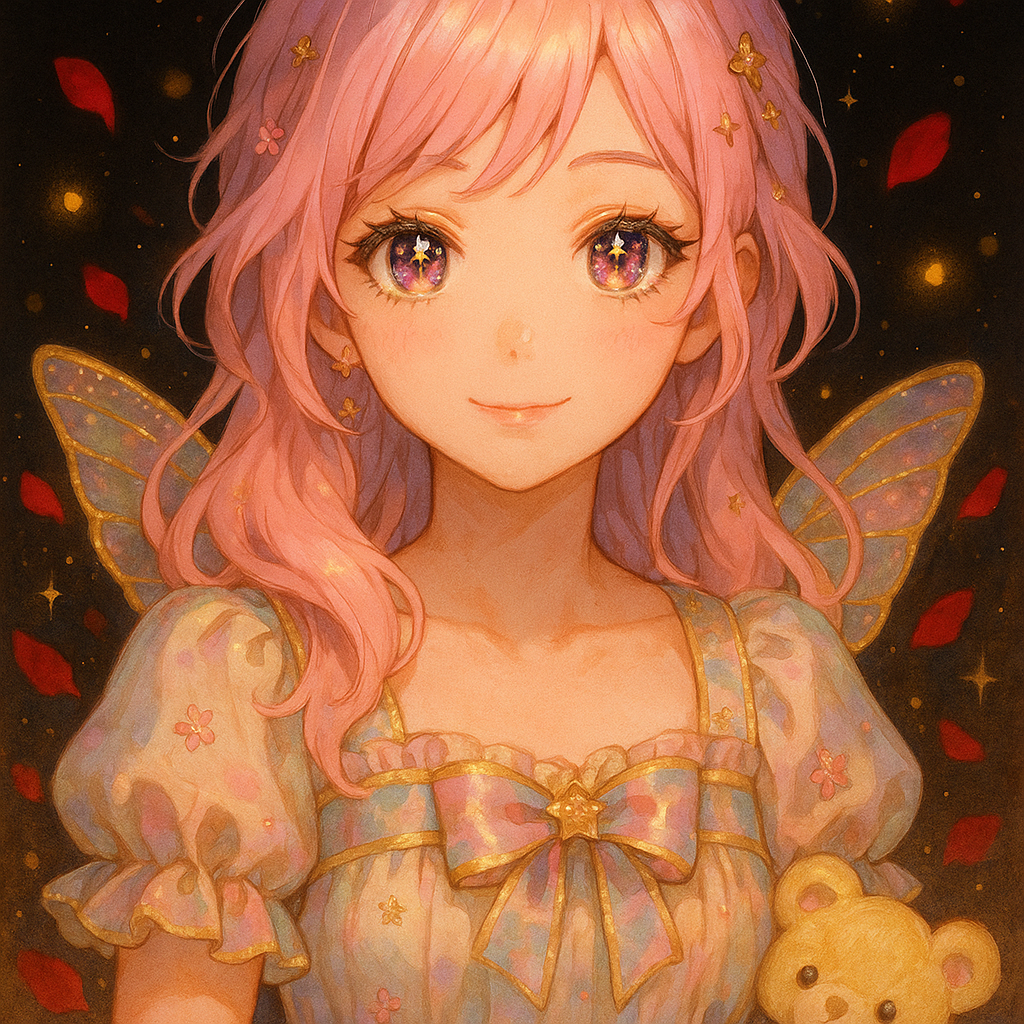
The inner experience of the Fairy archetype is specific enough to be worth describing carefully, because it is often misread from the outside as simpler or lighter than it actually is. Understanding what the fairy dynamic feels like from within, for the fairy and for the partner who holds them, is essential to inhabiting it with real depth.
What It Feels Like to Be a Fairy
Fairy practitioners describe their inner experience as a genuine quality of attention that is both broader and less linear than ordinary focused attention. The fairy genuinely notices several things at once; their attention moves between them not because they are unfocused but because their way of being in the world is genuinely wider than the single-thread attention most people bring to a conversation or an interaction. This is not performance. It is an accurate description of a particular cognitive and emotional style that some people simply have.
Within a scene, this quality of attention produces an experience that is simultaneously highly engaged and genuinely mobile. The fairy is not bored; they are attending to everything. They may shift focus, offer something unexpected, or follow a thought that appeared from nowhere, but the quality of their engagement is real and, when channelled effectively, intensely present. Partners who understand this can find it exhilarating; partners who misread it as indifference or disrespect tend to find it frustrating.
Fairy practitioners also commonly describe a genuine quality of delight that is not manufactured: real pleasure in beautiful things, real enchantment at unexpected connections, real satisfaction in the experience of being fully seen by someone who can hold them. This delight is one of the fairy's most significant gifts to a dynamic; it makes everything around them more vivid and more alive. The challenge the archetype poses is learning to direct that delight in ways that are also genuinely present for the partner rather than only being pleasurable for the fairy.
What It Feels Like to Hold a Fairy
For the Dominant or partner who holds a fairy, the inner experience is characterized by a quality of constant engagement that requires a particular kind of alert, responsive attention. Holding a fairy is not the same as managing a brat: the brat's provocations have a fairly predictable logic, and the response is usually one that reasserts clear authority. The fairy's movements are more lateral, more genuinely surprising, and the partner who holds them needs to be genuinely delighted by the unexpected rather than only tolerant of it.
Practitioners who describe successfully holding a fairy partner speak of a quality of being kept alive by the dynamic: the fairy's genuine delight is contagious, and the experience of catching someone so vivid and so genuinely elsewhere is, for the right partner, one of the most pleasurable experiences a dynamic can offer. The moment when the fairy's attention fully arrives, when they are completely present and looking directly at their partner, has a quality that practitioners describe as precisely the reward for all the effort of the chase.
The challenge for the partner is developing the capacity to be genuinely interested in the fairy's lateral logic rather than simply demanding that they make linear sense. Fairy practitioners respond most fully to partners who can follow an unexpected connection and find it interesting, who can hold the fairy's capriciousness with warmth and genuine curiosity rather than impatience, and who understand that the fairy's full attention is a gift rather than a baseline expectation.
Who Tends Toward This Archetype
Fairy practitioners very often have strong aesthetic sensibilities and a genuine love of beautiful, whimsical, and unexpected things that is not performance but simply their natural orientation to the world. They tend to notice the specific slant of light in a room, the interesting texture of an unexpected object, the surprising connection between two apparently unrelated ideas. This broad perceptual engagement is part of what produces the fairy's characteristic quality of attention.
Many fairy-identified practitioners have backgrounds in cosplay, theatrical makeup, costume construction, or other craft traditions that center on creating and inhabiting aesthetic worlds. These skills map directly into fairy dynamics, and the investment in wings, iridescent fabrics, flower crowns, and similar elements is not vanity but genuine craft expression. For these practitioners, the aesthetic of the archetype is not separable from its substance; the costume is part of how they access the inner experience.
The partners who tend to be most naturally drawn to fairy dynamics share a quality of genuine delight in beauty and unpredictability. They are not people who need rigid protocol or find uncertainty inherently anxiety-provoking. They tend to be alert, responsive, and genuinely playful rather than performatively so. The ability to be genuinely moved by the fairy's enchantment, rather than observing it from a distance, is probably the single most important quality in a Dominant who works well with this archetype.
- Fairy-identified practitioners often have. Strong, genuine aesthetic sensibility; broad lateral attention that notices multiple things at once; a natural quality of enchantment and delight; often craft skills in costume, makeup, or aesthetic creation.
- Partners who hold fairies well tend to have. Genuine delight in the unexpected; alert, responsive attention; the capacity to be moved by beauty rather than only to observe it; patience for lateral logic and genuine warmth for the fairy's capriciousness.
How to Know Whether This Archetype Fits You
The clearest signal that the Fairy archetype fits you is the recognition that the qualities the archetype centers, broad lateral attention, genuine delight, a quality of enchantment that is not performed, and a relationship with rules that is more creative than rebellious, describe you accurately rather than aspirationally. If you read the archetype description and feel, yes, this is actually how I work, that recognition is significant.
A useful self-check is to ask how your attention actually operates when you are genuinely engaged with something. Fairy practitioners tend to move through experiences with a quality of attending to multiple things at once and finding unexpected connections between them. If you find that genuinely foreign, the fairy may be more aspiration than nature; if it feels like an accurate description of your baseline, the archetype probably fits.
For potential partners of fairy practitioners, the question is whether the specific quality of holding someone vivid, unpredictable, and genuinely lateral produces in you a quality of engaged delight or a quality of frustrated incomprehension. Both responses are valid; neither is wrong. But the first response is the one that makes a fairy dynamic sustainable and pleasurable rather than exhausting.
Exercise
Map Your Fairy Energy
This exercise helps you locate your genuine fairy qualities rather than the qualities you think the archetype should have. It is most useful done quickly, without overthinking the answers.
- For each of the four typical fairy quotes on sak.red, write one sentence about whether it feels like something you would actually say and why. Do not evaluate whether you think you should feel this way; report whether you do.
- Write down the last time your attention moved to something unexpected in the middle of a conversation or interaction, what drew it, and how the person you were with responded. Notice whether your response to their response is more relief or frustration.
- Identify one moment in a past dynamic or relationship when your lateral, surprising quality was genuinely welcomed and appreciated by your partner. Describe what that felt like, specifically.
- Write one sentence about what you most want a partner to understand about how your attention works before they enter a dynamic with you.
Conversation starters
- Do the qualities the fairy archetype describes feel genuinely yours, or do they feel like a role you are stepping into? What is the difference, and does the difference matter to you?
- What does it feel like when a partner genuinely follows your lateral attention rather than redirecting you back to the main thread? How often does that happen, and what does it produce in you?
- What kind of partner best complements the fairy energy you bring? Not the partner you think you should want, but the one who actually makes the dynamic work.
- When your attention moves to something unexpected in a scene, what are you looking for from your partner in that moment?
Ways to connect with a partner
- Share your answers from the four typical quotes exercise and discuss which of them your partner finds most compelling, most surprising, and most challenging.
- Practice a short exchange in which your partner follows one of your lateral moves, whatever unexpected direction you take the conversation, rather than redirecting it, and both of you notice what happens.
- Tell your partner directly what you most need them to understand about how your attention works, using the sentence you wrote in step four of the exercise.
For reflection
What does it feel like when someone genuinely catches you, not just physically, but in the sense of meeting your lateral, surprising quality with genuine engagement rather than management?
The inner experience of the fairy is real before any scene begins. Recognising it clearly in yourself is the foundation of sharing it authentically.