
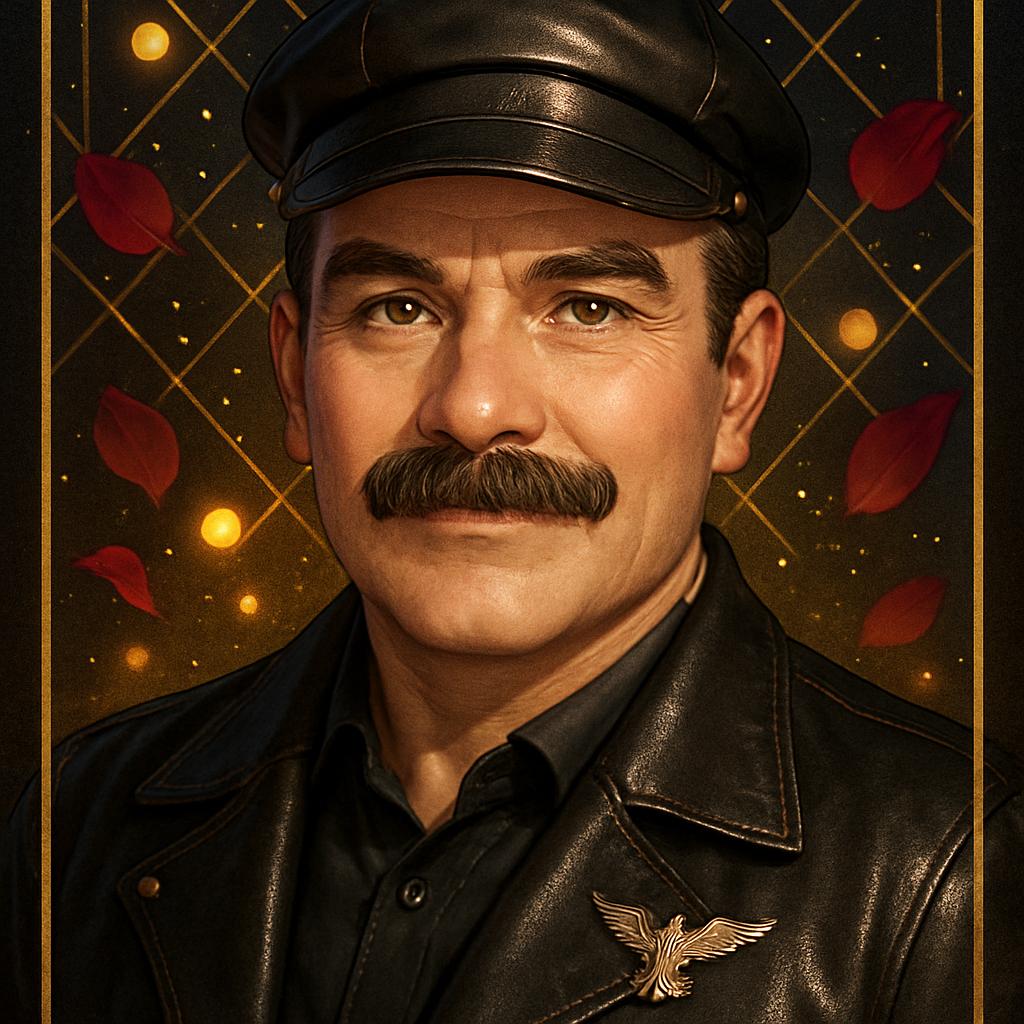
Leather identity is among the most specific and historically grounded identities in the BDSM world, and it is also among the most frequently misunderstood. This lesson gives you a clear and honest account of what leather identity involves, where it came from, and what distinguishes it from other power-exchange or kink identities.
A living tradition, not an aesthetic
Leather identity is not primarily about what you wear. It is about what you have built: your relationship to a specific community and its history, the mentorship you have received and given, the values you carry into every dynamic you enter, and the ongoing commitment you make to leather culture as a living thing. Many people own leather gear and are not leather people. The distinction is not about possession but about sustained engagement with the tradition.
The leather community emerged primarily from postwar gay male bar culture in American cities, developing a set of values around sexual and personal freedom, brotherhood, technical mastery, and fierce loyalty that were forged partly in opposition to mainstream society's hostility. Those origins shaped everything: the emphasis on earned authority, the suspicion of pretension, the care for community infrastructure, and the weight given to history. A leather person understands this history not as a curiosity but as something they carry.
Leather identity has expanded significantly since its origins. Leatherwomen, nonbinary leather people, and leather people of color have all worked to claim and expand this identity, building organizations like ONYX (for leather people of African descent) and Defenders (for leather women) that honor core leather values while challenging the original demographic narrowness of the tradition. Contemporary leather identity includes all of these people and the work they have done.
Where leather sits in the broader world of BDSM
BDSM encompasses an enormous range of practices and identities organized around the overlapping concepts of bondage and discipline, Dominance and submission, and sadism and masochism. Leather identity intersects with all of these but belongs to none of them exclusively. Many leather people practice D/s dynamics, rope bondage, impact play, or protocol-heavy M/s relationships, but leather is the container that holds all of it within a particular community, history, and set of values.
If you are familiar with other BDSM role identities, leather identity differs in a specific way: it is less about what you do in scenes and more about who you are in community. A sadist is defined by a particular relationship to pain and sensation in their practice; an Impact Top is defined by their craft with specific implements. A leather person is defined by their relationship to a tradition and the community that carries it. Their specific practices vary; their community orientation is the constant.
This means leather identity tends to be evaluated by the community rather than self-declared. Within most leather communities, you earn the right to call yourself a leatherman or leatherwoman through demonstrated conduct, sustained participation, and recognition from established community members. This is not gatekeeping for its own sake; it reflects a community that has had to rebuild itself through crisis and understands that identity is demonstrated through action over time.
The weight of history
The AIDS crisis is an inescapable part of leather community history, and any honest engagement with leather identity has to include it. The epidemic decimated an entire generation of established leather people in the 1980s and early 1990s, killing the mentors, title holders, bar owners, and community organizers who had built the world that younger leather people were entering. What survived did so partly through grief and partly through fierce commitment: leather people who lived through that period rebuilt community infrastructure, created the NAMES Project AIDS Memorial Quilt in significant part through their activism, and made a deliberate decision to preserve and transmit what had nearly been lost.
Leather people who came after that period, whether they lived through it themselves or entered leather culture in subsequent decades, inherit this history. Understanding it is not optional for someone who wants to claim leather identity seriously. The Leather Archives and Museum in Chicago exists because established leather people recognized, in the middle of a catastrophe, that mainstream culture was not going to preserve their community's history for them. That recognition and the action it prompted is itself a model of what leather values look like in practice.
Contemporary leather identity is also shaped by the ongoing political dimensions of sexual freedom advocacy that have always been part of leather culture. From the early efforts to defend leather bars from police harassment to current advocacy around consent law and sexual civil liberties, leather people have understood that the freedom to practice their lives requires active defense.
What makes leather identity distinct from similar roles
People sometimes wonder how leather identity differs from being a Dominant, a Master, a rigger, or other kink roles that involve protocol, authority, or specific techniques. The difference is community and history. A Dominant may practice power exchange with extraordinary care and skill without being a leather person; a leather person brings to everything they do the weight of a specific tradition, the mentorship relationships that transmit it, and the community investment that sustains it.
Leather identity is also distinct from a protocol orientation more generally. Protocol-oriented BDSM practitioners develop careful structures for their dynamics, but those structures can exist entirely within a relationship without connection to any broader community history. A leather person's protocols are embedded in a lineage, even if that lineage is not formally named. The way they carry themselves, the way they treat gear, the way they relate to mentors and mentees, all of these reflect values that were transmitted to them from someone who learned them from someone else.
Finally, leather identity differs from simply identifying as kinky in its emphasis on responsibility to the community rather than only to one's own practice. Leather people are expected to contribute: to mentor, to serve, to organize, to show up. The community's survival across one of the worst crises it has ever faced was made possible by people who understood this obligation and acted on it.
Exercise
Your First Inventory of Leather Orientation
Before going further in this course, take time to get specific about what draws you to leather identity. Writing clarifies what thinking alone tends to leave vague.
- Write down three things that draw you specifically to leather identity, as distinct from other kink roles or identities you are aware of. Be as concrete as you can about what the attraction actually is.
- Write down one aspect of leather identity, based on what you have just read, that you had not fully considered before. What does engaging with it feel like?
- Write one sentence about what community means to you in the context of a kink or leather identity, and whether you already have connections to leather community or are approaching it as a newcomer.
- Consider the relationship between history and identity described in this lesson. Write one sentence about how carrying a community's history changes the way you understand what you are doing when you practice this identity.
Conversation starters
- What aspects of leather community history feel most significant to you, and why?
- How do you understand the difference between wearing leather as an aesthetic and claiming leather as an identity?
- What does it mean to you that leather identity is typically earned through community recognition rather than self-declaration?
- Have you had any contact with leather community, whether through events, people, or reading? What has shaped your understanding of what leather is?
- What draws you to the idea of belonging to a tradition that carries specific history and values?
Ways to connect with a partner
- Share this lesson with a partner and ask them what their associations with leather identity were before reading it, and whether those associations have shifted.
- Discuss together what community investment means to each of you, and whether you have experience with communities that have their own history, values, and earned membership.
- If either of you has existing connections to leather community, talk about what those connections have taught you about what leather identity involves in practice.
- Ask each other what aspects of leather's specific history feel most important to understand before engaging more deeply with this identity.
For reflection
What does it mean to you that leather identity is built through sustained community engagement and transmitted through mentorship, and how does that understanding change the way you think about what claiming this identity involves?
Leather identity is one of the most serious and historically grounded identities in the kink world, and its seriousness is inseparable from its depth. The next lesson turns inward, to explore what leather identity feels like from the inside.