
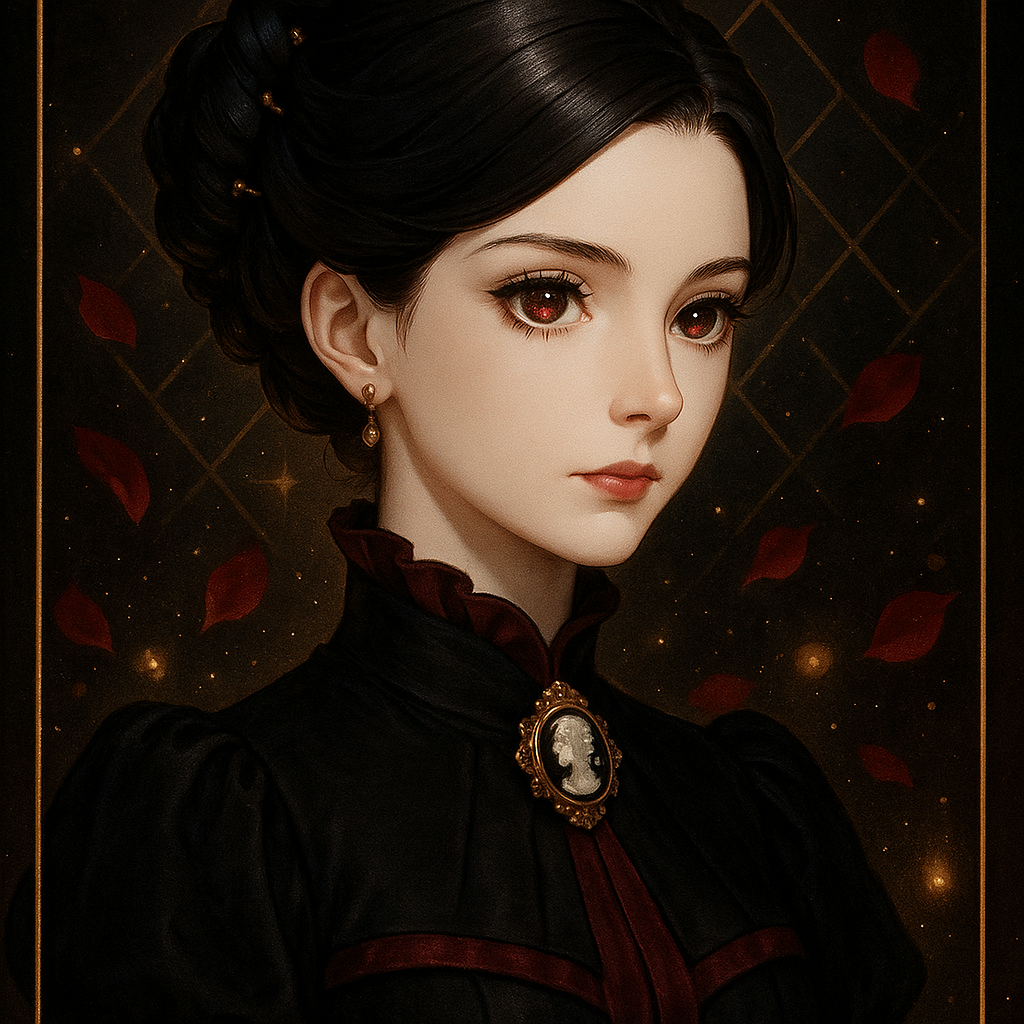
The Victorian Dom brings one of history's most elaborately codified social worlds into power exchange: the formal language, the specific protocols, the exquisitely maintained surface beneath which authority moves with complete certainty. This lesson establishes what the archetype is, what the historical period contributes to it, and what makes it distinct from other protocol-based dominant orientations.
What the Victorian period provides
The 19th century, and particularly its British expression, produced some of Western culture's most elaborate and psychologically rich systems of social hierarchy and behavioral expectation. The social rules of the Victorian period were extraordinarily detailed: who addressed whom first, how, in what language, with what specific form of address; who sat, who stood, who poured, who was served; what was said, what was implied, and what was never said aloud but universally understood. These rules structured every interaction, and command of them was itself a form of power.
For BDSM practice, this historical reality provides an unusually rich framework. The Victorian period's social structure was genuinely hierarchical, genuinely formal, and genuinely built around the power of those who knew the forms and the subordination of those who did not. In consensual kink, the Victorian Dom makes explicit what was always implicit in that structure: the relationship between perfect conduct and genuine authority, between impeccable surfaces and the control that operates beneath them.
The period also provides specific aesthetic material of considerable richness. The clothing, the objects, the architecture of social interaction, the specific language of the 19th century: these are available as real historical material that practitioners can engage with at any level of depth, from casual surface reference to genuine scholarly investment. This historical depth gives Victorian Dom dynamics a specificity that purely invented fictional frameworks do not have.
The structure of Victorian social authority
Victorian social authority operated through forms rather than through force. The person who held social power did not need to shout or compel; they maintained the forms perfectly and expected those beneath them in the hierarchy to meet those forms or be corrected. The correction was typically formal, precise, and devastating in its calm: a raised eyebrow, a specific word, a perfect silence that communicated the departure from proper conduct without requiring dramatic intervention.
This model of authority, the person who is so completely command of the forms that departure from them is immediately visible and immediately addressed, maps with unusual precision onto BDSM protocol dynamics. The Victorian Dom does not need to be loud or dramatic. They need to be impeccable. Their authority is demonstrated not by overwhelming force but by perfect, unflappable command of every detail of the formal structure they have established.
For practitioners who find this model genuinely compelling, rather than merely aesthetically interesting, the Victorian Dom archetype provides a framework that honors a real historical tradition of power expression while bringing it into an entirely contemporary and consensual kink context. The formal authority is real; the consent is explicit; and the two are not in tension.
How Victorian Dom dynamics fit within BDSM
The Victorian Dom sits most clearly within the Dominance and submission dimension of BDSM, with a strong emphasis on protocol dynamics and historical roleplay. It is closely related to, but distinct from, several other dominant orientations. The Gentleman Dom shares an emphasis on refined conduct, but the Victorian Dom is specifically period-grounded and typically more formally structured. The Master and Mistress archetypes share the household hierarchy dimension, but the Victorian Dom has a specific aesthetic frame and a set of historical conventions that give it a particular character.
The archetype encompasses considerable internal variety. The upper-class household model, with its strict hierarchy of service and specific protocols for every domestic interaction, is one expression. The drawing room Dominant who controls the social world through perfect etiquette and precise expectation is another. The Victorian doctor or scientist, with the period's clinical framing of authority over the body, represents a distinct subset that some practitioners develop with considerable specificity. The governess or tutor scenario, where instruction and correction express themselves through the formal conventions of the period, is yet another.
Common to all of these is the emphasis on form: the specific way in which things are done, the language used, the manner maintained, the departures corrected. In Victorian Dom dynamics, how a thing is done is as important as whether it is done, and often more so. This emphasis on form as an expression of genuine authority, rather than merely as aesthetic decoration, is the archetype's core.
What the archetype is not
The Victorian Dom archetype is sometimes confused with period costume play that happens to include a power dynamic. The costume and the aesthetic are significant elements, but they are not the core of the archetype. A Victorian Dom who knows the specific forms of address of the period, who maintains those forms with genuine consistency, and who uses departures from them as precise opportunities for correction has something fundamentally different from a practitioner who dresses in Victorian costume and improvises a dominant scene without specific period-grounded protocol.
The period's genuine social history is also worth engaging with honestly. The 19th century had real power dynamics around gender, class, and race that are complex and sometimes uncomfortable. Many Victorian Dom practitioners engage with these historical realities thoughtfully, choosing which elements to draw on and which to set aside, and approaching the period's aesthetics with genuine historical knowledge rather than an idealized or sanitized picture. This thoughtfulness tends to produce richer and more interesting dynamics than an uncritical nostalgic engagement.
Finally, the Victorian Dom is genuinely a dominant archetype expressed through elegance rather than force, but the authority is real. The partner who submits within a Victorian Dom dynamic is genuinely submitting; the protocols genuinely structure their conduct; the corrections are genuinely authoritative. The formality is not a softening of the power exchange but a specific expression of it.
Exercise
Your Period Frame
The Victorian Dom archetype offers several distinct period framings. This exercise helps you identify which resonates most strongly and what historical engagement you want to bring.
- Write about which aspect of the Victorian period most appeals to you as a Dominant framework: the upper-class household hierarchy, the drawing room social world, the medical or scientific authority frame, the governess or tutor scenario, or another expression. What specifically draws you to that frame?
- Consider your current knowledge of the period: its social conventions, its specific language, its objects and aesthetics. Write honestly about what you know well, what you know partially, and what you would want to learn more about.
- Write one sentence about what the concept of power expressed through perfect form, rather than through force or volume, means to you, and whether that is a model of authority you find genuinely compelling.
- Identify one specific element of Victorian aesthetics, a form of address, an object, a specific social convention, that you find most interesting and would most want to incorporate into a dynamic.
- Write about the distinction between engaging with the period's history thoughtfully and engaging with an idealized version of it. Which approach do you want to take, and what would that look like in practice?
Conversation starters
- Which specific period frame within the Victorian Dom archetype appeals most to you, and what specifically draws you to that frame rather than others?
- What does power expressed through perfect form, authority that does not need to raise its voice because the forms themselves do the work, feel like to you as a dominant quality?
- How much historical depth do you want to bring to the aesthetic, from surface-level period inspiration through genuine scholarly engagement, and what does that investment look like practically?
- What is the relationship between the Victorian period's genuine social history and the consensual kink dynamic you want to build from it?
- What specific elements of the period, objects, language, social conventions, do you most want to incorporate into your practice?
Ways to connect with a partner
- Share the specific period frame you are most drawn to with a prospective partner, including specific historical or fictional references, so that both of you have a clear picture of the aesthetic and protocol register you are working in.
- Discuss the historical engagement question together: how much period accuracy matters, what sources you are both willing to engage with, and where the dynamic will draw its specific conventions from.
- Explore one specific Victorian-period social convention together, reading about it and discussing how it would be adapted into the consensual kink context, as an early exercise in collaborative scene design.
For reflection
What does the specific model of authority the Victorian period offers, power expressed through perfect form and impeccable conduct rather than through force, tell you about what kind of Dominant you are or want to be?
The Victorian Dom archetype is built on a real historical world of extraordinary richness and offers a specific model of authority that is genuinely different from most dominant orientations. The next lesson explores what inhabiting this archetype feels like from the inside.