
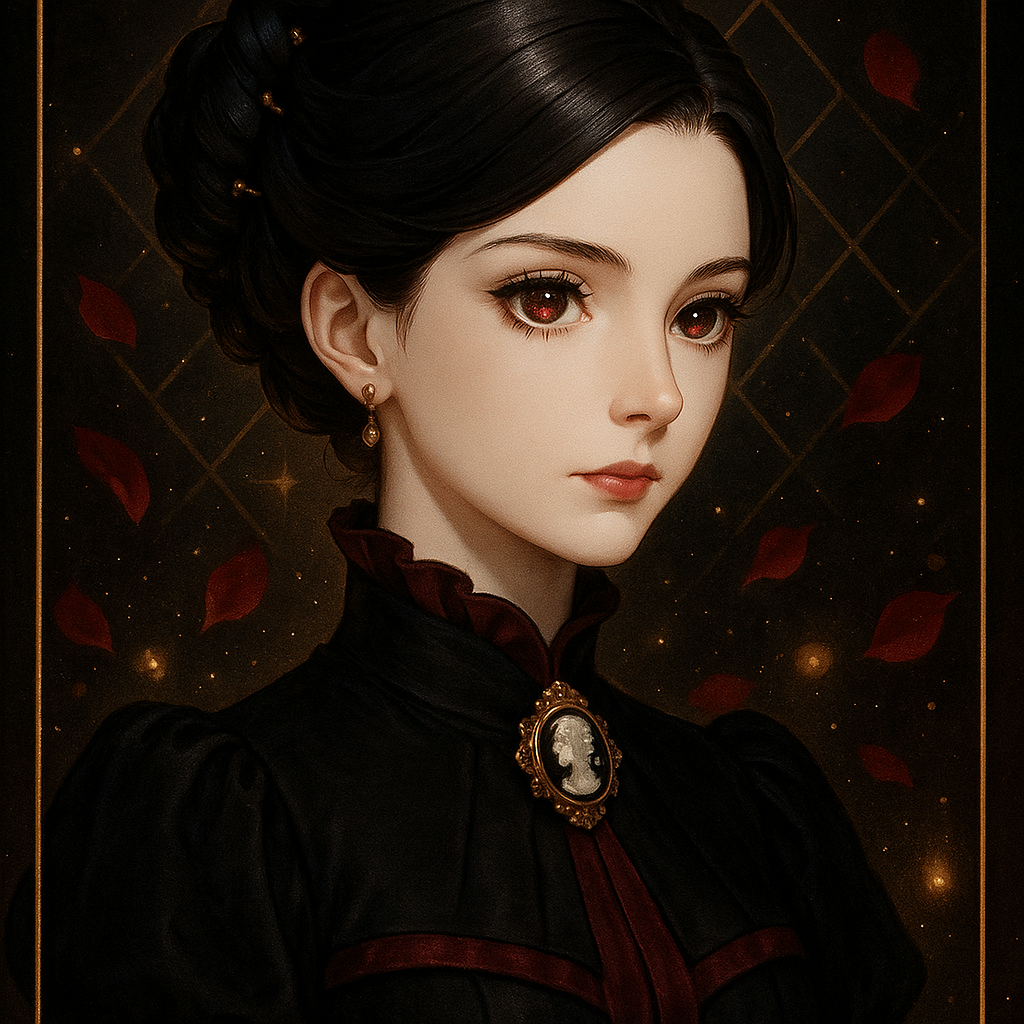
The Victorian Dom archetype's most significant long-term challenge is also its most important distinguishing feature: the warmth for the person that exists beneath, and is expressed through, the formal structure. This final lesson addresses aftercare in the Victorian context, the common pitfall of aesthetic-over-relationship, what genuine growth in this role looks like, and the quality of care that makes Victorian Dom dynamics genuinely sustaining rather than merely elegant.
The care beneath the forms
The most compelling Victorian Dom practitioners are those whose formal authority is grounded in genuine regard for the person within the dynamic, rather than primarily in pleasure at the aesthetic itself. This distinction, between formal authority as an expression of genuine care and formal authority as an aesthetically satisfying structure independent of the specific person inhabiting it, is the most significant determinant of whether a Victorian Dom dynamic is genuinely sustaining over time.
Genuine care in a Victorian Dom dynamic does not look like abandoning the formal frame to express warmth. It looks like formal warmth: the specific Victorian Dom expression of care that operates within the register of the dynamic rather than stepping outside it. A Victorian Dom who addresses their partner with particular care in the specific conventions of the period, who shows appreciation through the formal language of appreciation, who provides comfort through the specific protocols of the dynamic, is expressing warmth in a way that is consistent with the archetype rather than in tension with it.
This requires understanding a partner specifically and accurately enough to know what formal warmth means to them. A partner who experiences formal acknowledgment and precise appreciation as genuine care has a different experience than one who finds warmth only outside the formal frame. Learning which is true of a specific partner, and calibrating the expression of care accordingly, is one of the ongoing skills of the Victorian Dom.
Aftercare in the Victorian register
Aftercare in Victorian Dom dynamics has a specific character that reflects the archetype's formal register. The transition from the formal scene to post-scene care needs to be explicit and warm, but it can maintain a quality of deliberate attentiveness that is consistent with the dynamic's character without being cold or impersonal.
Practitioners often find that a specific closing ritual, a particular way of ending the formal frame that is itself an established part of the dynamic, makes the aftercare transition more rather than less smooth. A closing phrase, a specific gesture, a particular action that marks the formal scene's end, provides clarity for both parties about when the formal frame has concluded and ordinary human connection has resumed. Without this marking, the transition can be unclear and the post-scene period can feel adrift.
The specific form of aftercare a partner needs after a Victorian Dom scene varies. Some find that maintaining a degree of formality, perhaps a warmer version of the formal register, supports them in returning to their ordinary self gradually rather than abruptly. Others need a complete and explicit shift from the formal to the informal: ordinary conversation, physical comfort, the Dominant's genuine ordinary person making direct and warm contact. Asking specifically what a partner needs for their transition, rather than assuming, and developing that knowledge over time, is the aftercare practice that serves this dynamic best.
Common pitfalls in Victorian Dom dynamics
Several patterns recur often enough in Victorian Dom dynamics to be worth naming. The first is the aesthetic that substitutes for the relationship. A dynamic in which both parties are primarily absorbed in the beauty and elegance of the formal structure, in the pleasure of the period aesthetic and the specific conventions they have mastered, but in which neither is genuinely present to the other as a specific person, will eventually feel hollow. The forms are the vehicle; the relationship is the destination. Losing sight of that order produces a dynamic that looks beautiful and functions poorly.
The second is the formal register that never drops. If the Dominant maintains the Victorian persona entirely, including outside of specific scene times, and never allows the partner to encounter them as an ordinary accessible person, the relationship develops a quality of unreality that prevents genuine intimacy. The formality is an expression of one dimension of the dynamic, not its entirety. A partner who knows their Dominant only in the formal register is in a less fully human relationship than the dynamic deserves.
The third is protocol inflation: the gradual addition of more and more precise expectations until the system becomes so elaborate that consistent maintenance is impossible and the dynamic spends most of its energy on failure management rather than genuine engagement. Starting with fewer protocols and adding only what genuinely enriches the dynamic, rather than assuming that more elaborate always means more effective, produces a more durable and more satisfying result.
Growth and the longer view
The Victorian Dom archetype grows more genuinely compelling over time when the practitioner has developed both the formal skills and the genuine care for the person. In the early phase of the dynamic, the protocols are most consciously maintained, the formal register requires most effort, and the historical research is most actively pursued. Over time, these elements become more natural, and what was effortful practice becomes genuine expression.
The most experienced Victorian Dom practitioners often describe a quality of ease in the formal register that the archetype's beginners do not have: the period's language and conventions have been internalized sufficiently that they emerge naturally rather than being consciously constructed in each moment. The correction is precise and calm because calm precision is now simply how this Dominant operates in this context, not because they are working against a contrary impulse. The aesthetic investment has settled into a collection of genuinely loved objects and a genuine personal aesthetic rather than an assembled display.
The longer view of the Victorian Dom archetype is ultimately the view of a practitioner who has built something genuinely rare: a dynamic of great formal elegance that is also an expression of real care for a specific person. This combination, the beautiful surfaces and the genuine warmth that moves through them, is the specific achievement that the archetype at its best is capable of, and it is worth working toward deliberately over time.
Exercise
The Warmth in the Form
This exercise asks you to examine how care, appreciation, and genuine regard for a specific person are expressed within the Victorian Dom's formal register.
- Write a specific expression of appreciation for a partner's conduct, in the Victorian Dom formal register: something you would say within the dynamic's formal frame to communicate that their service has been genuinely pleasing. Notice how warmth is expressed through form rather than despite it.
- Design a closing ritual for a formal scene: the specific words, conduct, or actions that would mark the end of the formal frame. Write what each element of the closing communicates.
- Write about the aftercare transition specifically: what you would do in the first five minutes after a formal scene's closing to support a partner's re-entry into ordinary reality, and what specific warmth would look like in that moment.
- Identify the pitfall from this lesson that you are most at risk of, and write one concrete thing you would do to guard against it.
- Write one sentence about what you want the Victorian Dom dynamic to have contributed to your life and your partner's life five years from now.
Conversation starters
- What does warmth look like within your version of the formal register, and how would a partner experience genuine care from you without stepping outside the dynamic's frame?
- What does your aftercare practice look like specifically, and how do you make the transition from formal scene to ordinary human connection explicit and warm?
- Which of the common pitfalls feels most relevant to your current practice, and what would addressing it look like concretely?
- How would you want us to manage the balance between the formal dynamic and the ordinary human relationship that exists outside it?
- What does growth in this role look like to you over the longer term, and what do you want to be able to say about this dynamic years from now?
Ways to connect with a partner
- Ask a partner to describe, specifically, whether they feel genuinely cared for as a person within the dynamic, and whether the formal warmth you offer reads as care to them or whether they need something more direct in the aftercare period.
- Establish and practice the closing ritual together before it needs to function in an actual scene, so that both parties have a shared and embodied understanding of what the formal frame's end looks and feels like.
- Have an explicit conversation about the relationship between the formal dynamic and the ordinary human relationship: how much of your ordinary selves each of you wants to bring to the other, and what the dynamic looks like when you are not in the formal frame.
For reflection
What is the specific warmth that you want a partner to experience within your Victorian Dom dynamic, and what would they need to see from you for them to genuinely feel that care rather than merely the elegance of the structure?
Perfect conduct, maintained impeccably, is one kind of intimacy. The Victorian Dom at their best is someone who understands that this intimacy is the vehicle for genuine care, not a substitute for it, and whose formal authority is, underneath its beautiful surface, an expression of real regard for the specific person they are with.