
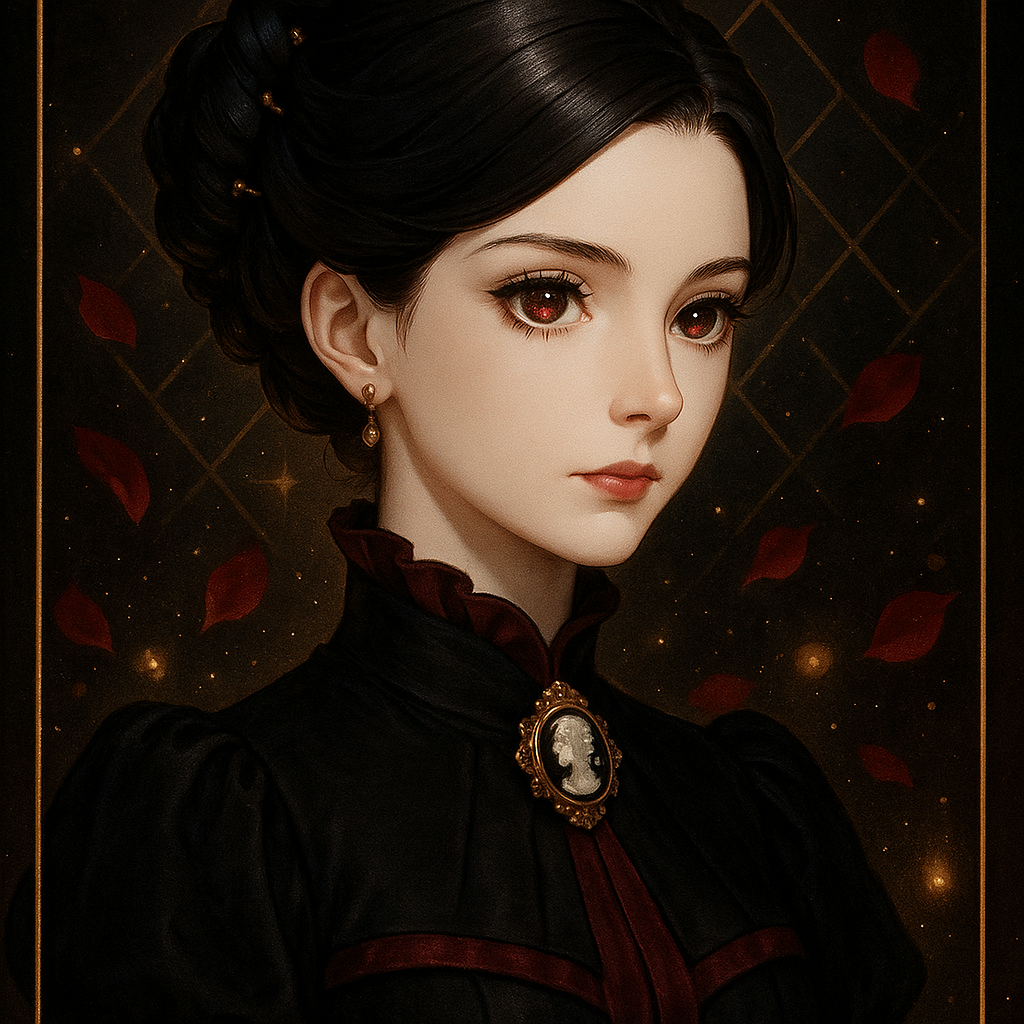
This lesson covers the concrete practice of Victorian Dom dynamics: the dressing rituals and preparation sequences that open formal scenes, the specific scene types most characteristic of the archetype, the daily-life extension of protocol, and the practical first steps for someone ready to move from understanding the archetype to inhabiting it.
Dressing rituals and scene opening
Victorian Dom scenes often begin with a dressing ritual or preparation sequence that marks the transition into the dynamic's formal world. This might involve the Dominant being dressed or groomed by their partner in specific ways, according to specific protocols. It might involve the Dominant attending to the partner's presentation, assessing and directing their appearance and conduct before the formal scene begins. It might be a mutual transition into period-appropriate dress that marks the beginning of the formal frame.
The opening of a Victorian Dom scene deserves as much deliberate attention as its main body. The transition from ordinary life into the formal world of the dynamic is itself a meaningful experience, and its specific quality, how it happens, what marks it, what the first formal words are, sets the scene's entire register. A poorly marked opening leaves both parties uncertain about when the formal frame has truly begun; a well-marked opening creates immediate clarity.
The specific language with which a Victorian Dom scene opens is worth developing with care. The first formally addressed words, whether instruction, assessment, or greeting in the period's specific register, establish the dynamic's world from the outset. Practitioners who have developed a characteristic opening, a specific way of stepping into the formal frame that is consistent across scenes, find that consistency itself becomes part of the ritual's power: both parties know what the opening signals, and both step into their respective roles more readily.
Scene types specific to the Victorian Dom
Several scene types are particularly characteristic of the Victorian Dom archetype, each with its own specific protocols and dynamic qualities.
- The formal household scene. The central and most classic expression of the Victorian Dom archetype: a structured period in which the household's hierarchy is enacted through specific forms of address, specific tasks performed to specific standards, and correction for departures from the expected form. Household scenes may focus on a specific element of domestic service, such as tea service or formal dining, or may encompass a broader range of household interactions conducted in the formal register.
- The drawing room scenario. A social scene structured around the specific conventions of Victorian drawing room interaction: formal calls, specific rules of conversation and address, the management of who speaks when and in what form, with the Dominant enforcing the social rules with impeccable precision. Drawing room scenarios have a particular quality of witnessed performance that some practitioners find compelling.
- The medical or scientific examination. A Victorian-framed examination scene drawing on the period's clinical distance and formal treatment of the body: the doctor or scientist who addresses the subject with complete professional formality, whose authority is expressed through the period's specific medical or scientific register. This scene type requires its own specific research into the period's clinical language and conventions, and benefits from detailed pre-negotiation of exactly what the examination will involve.
- The governess or tutor scenario. Instruction and correction expressed through the formal conventions of the period: the governess or tutor who sets specific standards, assesses performance against them with formal precision, and corrects departures with the authority of their position. Instruction scenarios have a particular quality of developmental tension that other Victorian Dom scene types do not share.
Tea service as a scene practice
Tea service occupies a special position in Victorian Dom dynamics because it provides a specific, highly codified ritual that encapsulates many of the archetype's core qualities in a single practice. The Victorian tea ritual had precise conventions: how the tea was prepared, how it was presented, the specific form in which each element was offered, what was said and what was not. A partner performing formal tea service according to the Dominant's specific standards must attend to every element with care, and each departure from the expected form provides a precise correction opportunity.
For practitioners who want a starting point for Victorian protocol dynamics, tea service is often a highly effective one. It is contained, repeatable, aesthetically beautiful, and it engages both the service and the protocol dimensions of the archetype. The Dominant who receives tea service in the correct formal manner, who attends to each element of the service with appropriate assessment, and who addresses departures from the expected form with precise correction, is enacting the core dynamic in a specific and manageable format.
Developing a specific tea service protocol, agreed in advance and practiced until it becomes natural, also builds the shared vocabulary and shared experience that more elaborate Victorian Dom scenes require. What the two parties learn about working together in the structured tea service context is directly applicable to more complex scene structures.
First practical steps
For someone approaching the Victorian Dom archetype for the first time, the most useful entry point is usually the form of address. Establishing one specific protocol, the correct way a partner addresses you and the conduct that accompanies it, and practicing that protocol consistently in non-scene contexts before building a formal scene structure allows both parties to develop familiarity with the basic dynamic without the complexity of a full scene.
Once a form of address is established and comfortable, adding one additional protocol, perhaps a specific way of entering a room or a specific form of presenting themselves, begins to build the system gradually. This graduated approach, adding protocols one at a time as each becomes comfortable, produces a more stable and more genuinely maintained system than establishing a comprehensive protocol framework at once.
The aesthetic environment also rewards early investment. Victorian Dom dynamics are significantly enhanced by a space that reflects the period's aesthetic, even in simple ways: candles or appropriate lighting, a specific tablecloth or fabric, one or two period-appropriate objects. These environmental elements are not optional decoration; they do atmospheric work that supports both the Dominant's persona and the partner's immersion in the dynamic's world.
Exercise
Your First Scene Structure
This exercise helps you design a first Victorian Dom scene with enough specific detail that it can be prepared for and executed confidently.
- Choose one scene type from the four described in this lesson. Write one paragraph describing what that scene would look like in your specific context with a specific partner, including the setting, the protocols in play, and the general arc.
- Write the opening sequence of the scene: the specific words, conduct, and formal language with which you would begin the formal frame. Include what you would say, what your partner would be expected to do, and what the first correction opportunity might look like.
- Design the tea service protocol or an equivalent specific service ritual that would work as a focused scene within your dynamic: what exactly is expected at each step, what correct service looks like, and how a departure from the expected form would be addressed.
- Write your scene closing: how the formal frame would end, what specific words or conduct would mark the transition to aftercare, and how you would make that shift from formal to warm.
- Identify one element of your planned scene that you are least certain about and write what preparation would help you feel more confident.
Conversation starters
- Which scene type feels most natural as a starting point, and what specifically draws you to it rather than the others?
- What does your scene opening look like specifically: the first words, the first formal interaction, the moment when both parties know the formal frame has begun?
- How would you want a tea service or similar specific service ritual to be structured in your dynamic, and what protocols would it involve?
- What aesthetic elements of the scene environment are most important to you, and what is your practical capacity to build and maintain them?
- How do you want to close a formal scene, and what does the transition from formal to aftercare look like specifically?
Ways to connect with a partner
- Practice one protocol element, a form of address or a specific conduct, in a non-scene context before building a formal scene, to discover how it feels for both parties before the pressure of a full dynamic.
- Build the scene environment together, making deliberate choices about the aesthetic elements rather than leaving them to chance, and discussing what each choice contributes.
- Conduct the first formal scene with a deliberate, agreed-upon closing that explicitly marks the transition to aftercare, so that both parties know when the formal frame has ended and ordinary human connection has resumed.
For reflection
What is the single element of Victorian Dom practice that you most want to experience, and what would you need in place, in yourself, in your partner, and in your scene's environment, for that experience to be genuinely what you are imagining?
Victorian Dom practice rewards deliberate preparation, specific protocols, and genuine aesthetic investment. Built carefully, it produces a dynamic of unusual richness and elegance. The final lesson turns to the longer view: what sustains this dynamic over time, and what warmth beneath the formality makes it genuinely caring.