
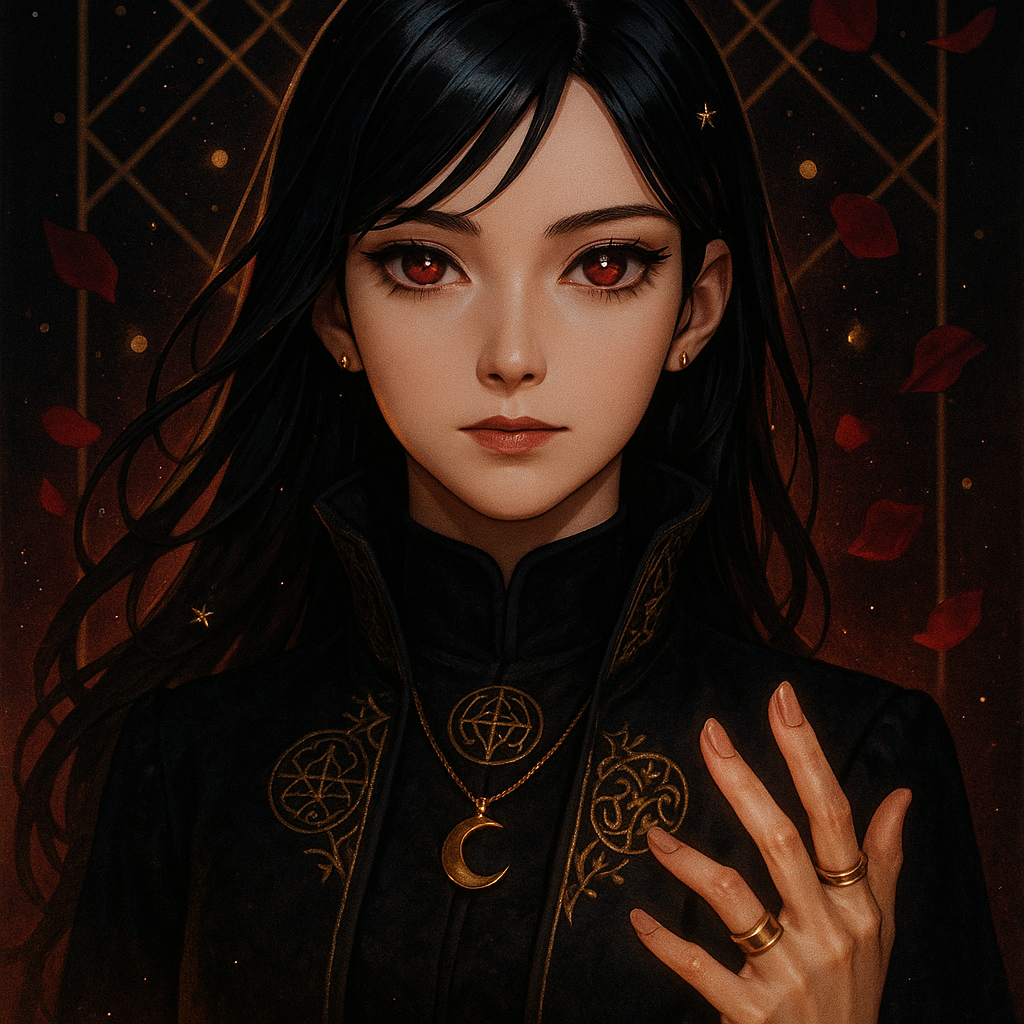
The first Witch scenes are exercises in bringing together all the elements that have been prepared: the atmospheric world, the ritual entry, the specific scene type, and the ongoing attention to the partner's genuine experience. This lesson covers the major scene types, how to open and close ritual space, and what first scenes specifically require.
Opening Ritual Space
The transition from ordinary reality into the scene space is one of the most important moments in a Witch scene. In pagan and occult traditions, the opening of ritual space, sometimes described as casting the circle, is a deliberate act that marks the shift from ordinary time into sacred time. The kink equivalent serves the same function: it signals to both parties that they are crossing a threshold, and everything that follows is within a different set of rules and registers.
An effective opening ritual might include a specific sequence of atmospheric actions, the lighting of particular candles in a specific order, the use of a cleansing scent such as smoke or spray, a particular phrase or invocation spoken at the opening. What matters is that the sequence is deliberate, consistent, and recognized by both parties as the threshold marker. With a regular partner, this consistent ritual builds a conditioned response that deepens over time: the partner's psychological state begins shifting during the opening ritual rather than after it.
The Witch's manner during the opening is itself communicative. Slow, deliberate movement, sustained attention, the absence of ordinary conversational casualness: all of these signal that the shift is already in progress. The opening is not the moment when the scene begins; it is the beginning of the beginning, the gathering of the atmosphere before it is fully present.
Major Witch Scene Types
Several scene types appear particularly naturally in the Witch archetype. Ritual binding scenes involve the deliberate, ceremonial binding of the partner with physical rope or cord, framed as the execution of a spell or working. The physical constraint is real; the framing gives it an additional layer of meaning that can deepen the partner's psychological experience of the constraint significantly.
Spell or contract scenes center on a formal agreement, a bargain struck between Witch and partner, with specific terms framed within the fiction. The content of the bargain corresponds to agreed-upon scene content in reality; the fictional framing gives it a specific quality of solemnity and weight that purely explicit instruction would not have.
Divination scenes use the fiction of the Witch reading the partner, through tarot, runes, or another system, as a vehicle for genuine intimacy and revelation. The Witch speaks real, accurate things about the partner through the medium of the fictional system, which creates a quality of being seen that many partners find among the most profound experiences of this archetype. This scene type requires genuine attentiveness and knowledge of the partner; cold-reading them inaccurately within the fiction is worse than not doing the divination at all.
Sensation scenes frame physical sensation play through the Witch's craft: a blindfold is part of the ritual preparation, different textures are the Witch's tools and remedies, temperature play is the application of her particular kind of power. The sensation is physical and real; the framing shapes how it is experienced.
- The opening ritual marks a genuine threshold and builds a conditioned response in regular partners that deepens over time.
- Ritual binding scenes frame physical restraint within a ceremonial spell context that adds a layer of meaning to the physical experience.
- Divination scenes require genuine attentiveness and knowledge of the partner; the revelations must be accurate to produce their effect.
- Sensation scenes use the Witch's craft framing to shape how physical sensations are experienced, not merely to describe them.
Closing the Circle
Closing the scene with the same deliberateness as opening it is as important as the quality of what happens in between. The close of a Witch scene marks the end of ritual time and the return to ordinary reality, and it requires a clear threshold marker just as the opening did. Without a deliberate close, the partner is left in an in-between state that is harder to come down from and that does not honor the completeness of the experience.
The closing might involve a specific phrase, the extinguishing of specific candles in a particular order, a gesture of release or ending, or a combination of elements. The physical transition back to ordinary light and sound should be gradual rather than abrupt, particularly after an immersive scene. Sudden return to bright light and ordinary room noise after a long, atmospheric scene is a jolt that disrupts the landing process.
After the formal close, the shift into aftercare should be immediate and clear. The Witch steps out of the archetype fully: the quality of attention changes, the voice changes, the physical posture changes. The person now present is the real person, providing genuine human care, not the character in an extended performance.
What First Scenes Specifically Require
First scenes in the Witch archetype, whether with a new partner or in the role for the first time, benefit from deliberate modesty in scope. The temptation to realize the fully atmospheric, elaborately ritualized scene you have been imagining is strong, but first scenes are primarily for establishing the communication patterns and the shared understanding that more advanced work depends on. A first scene that is smaller in scope, done with full attention to both parties' experience, is more valuable than an ambitious scene that leaves either party uncertain about what happened.
Debrief thoroughly after a first scene. What worked? What was the partner's experience of the atmosphere and the ritual? What would they want more of, and what was less effective than anticipated? This conversation gives you specific, real-world feedback that is more useful than any amount of advance planning.
Exercise
Designing Your First Full Scene
This exercise walks you through the design of a complete Witch scene from opening to close.
- Choose one of the scene types described in this lesson and write a two-sentence description of the specific scene you want to create: what happens, in what world, with what specific elements present.
- Write out the opening ritual in full sequence: every step, in order, with a one-phrase note about what each step is intended to do.
- Write the closing ritual in full sequence, with the same level of specificity.
- Identify the one moment in the scene where the Witch's authority will be most fully expressed, and plan specifically how you will handle that moment.
- Write a debrief question you want to ask your partner after the scene, one that will give you specific, useful information about their experience of the atmosphere and the archetype.
Conversation starters
- Which of the Witch scene types appeals to you most, and why? Is there one where you feel most genuinely yourself in the role?
- What has been the most effective opening ritual you have used? What made it work?
- How do you handle the close of a scene and the transition into aftercare while staying fully present as a real person?
- What have first scenes taught you about how your Witch archetype works in practice, as opposed to how you imagined it would?
Ways to connect with a partner
- Design the full scene together using the exercise structure, with each of you contributing to the elements you are each most invested in.
- After the scene, do a specific debrief about the opening ritual: did it work as a threshold experience? What did they notice in themselves during it?
- Ask your partner whether there was a moment in the scene where they most fully felt the Witch's authority. What was happening in that moment? That information is specific and useful.
For reflection
When you imagine the most powerful Witch scene you could create, what does it contain? What element, if achieved, would make it feel genuinely complete?
The first scenes are the beginning of learning what the archetype is capable of in practice. The final lesson considers the longer arc: how the Witch archetype deepens over time, what sustains it, and how to develop from performance into genuine grounded authority.