
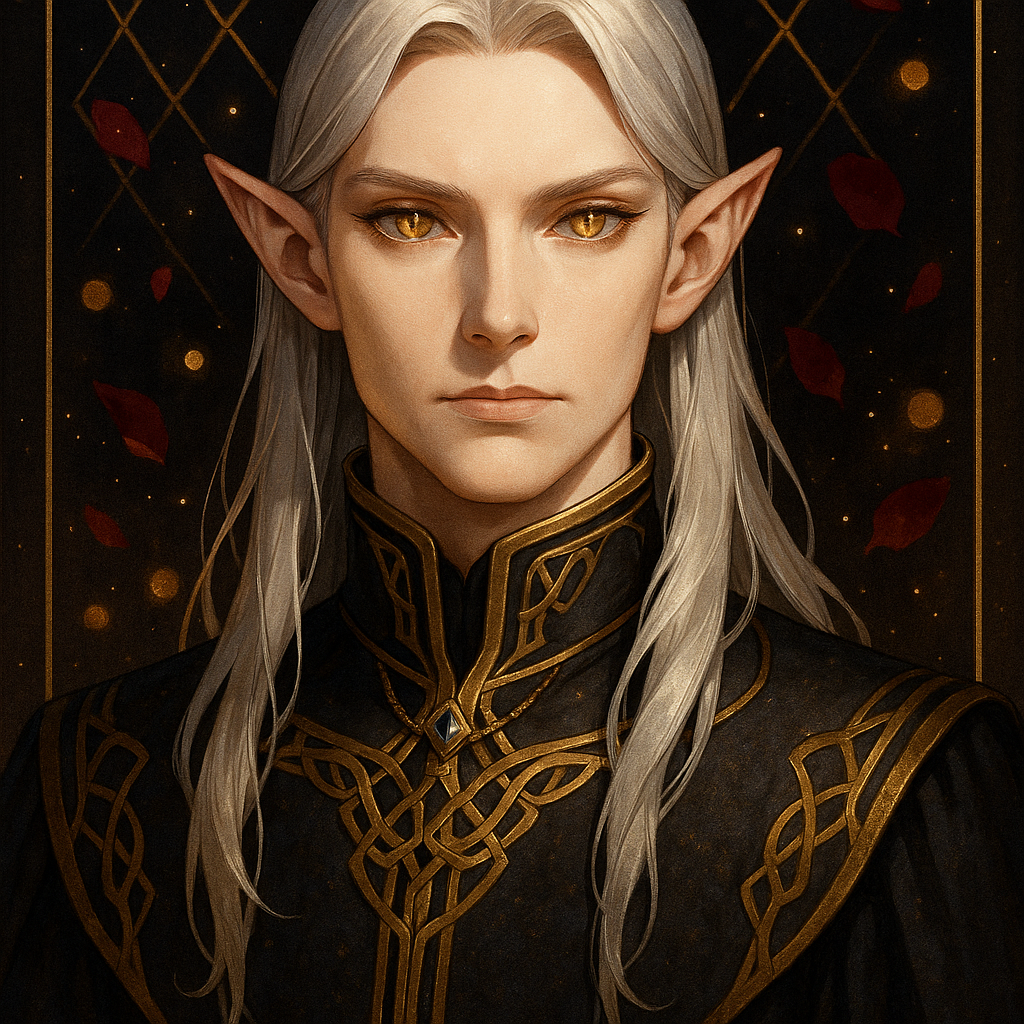
Negotiating an elf dynamic requires some specific attention that general BDSM negotiation guides do not always cover. Because the fictional frame is structural rather than decorative, the negotiation needs to include the fiction itself: what world you are building, what rules operate within it, and how you move between the scene and ordinary reality when you need to.
What Needs to Be Negotiated
All power exchange dynamics require negotiation of limits, safewords, and the nature of the exchange. Elf dynamics require these things and also require specific conversation about the fictional frame. At minimum, both parties need to agree on which elven tradition the scene is drawing from, because high elf court protocol and dark elf seduction are sufficiently different experiences that assuming alignment without checking is a real risk.
Beyond tradition, the negotiation should cover forms of address and protocol: what titles will be used, what conduct is expected of the submissive within the fiction, and what specific rules or rituals will structure the scene. These do not need to be exhaustive or rigid, but having a shared understanding of the basic protocol prevents the submissive from having to guess at expectations in ways that break immersion and create anxiety.
The negotiation should also cover aesthetic elements: what costume and environmental details will be present, what level of character maintenance is expected, and what kinds of breaks or departures from the fiction are acceptable during the scene. Many elf dynamics are high-immersion, and both parties benefit from clarity about how the scene will feel and how much investment in maintaining the fiction is being asked.
- Tradition and aesthetics. Which elven tradition are you drawing from? What aesthetic elements, including costume, environment, and forms of address, will be present?
- Protocol and conduct. What specific rules of address or conduct will apply within the scene? What is the submissive expected to do or not do, and how will corrections be handled?
- Immersion level and breaks. How high is the expected immersion? How will you move out of character when practical needs arise, and what signals will you use?
- Limits and safewords. What are each person's hard and soft limits? What safeword or signal will be used, and how will it work within a scene that may involve extended periods of protocol?
Bringing the Archetype to a New Partner
Introducing a new partner to elf roleplay requires calibrating between genuine enthusiasm for the archetype and openness about what it actually involves. Many people have general awareness of elves from fantasy literature or gaming, but the specific qualities that make the archetype work in a BDSM context, the disproportion of scale, the cool authority, the high level of aesthetic investment, are not always what people imagine when they hear the word.
A useful approach is to lead with the emotional experience you are trying to create rather than with the fictional frame. Describing the quality of authority you hold, or the quality of submission you are offering, in terms of how it feels rather than what it looks like can help a potential partner understand whether the dynamic appeals to them before you discuss the worldbuilding details. Someone who responds positively to the idea of yielding to something ancient and certain may be a good match even if they have never thought about elves in a BDSM context.
Sharing specific cultural references you draw from, whether particular books, games, or characters, is also a useful way to communicate what you are looking for with some precision. A partner who is familiar with the Dunmer of Morrowind will understand what you mean by a dark elf dynamic in a way that abstract description does not achieve.
Managing the Fictional Frame During Negotiation
One of the specific challenges of negotiating roleplay dynamics is that the negotiation itself happens in the real relationship between two actual people, not between the characters. This is worth naming clearly, particularly for dynamics where the fictional frame is strong enough that some practitioners feel the character pulling at them even during ordinary conversation.
All negotiation for elf dynamics should happen out of character, in plain language, with both parties speaking as themselves rather than as their scene personas. This is not a failure of immersion but the opposite: the scene can be more fully inhabited precisely because the consent and understanding beneath it are real and explicitly established. The elf's ancient authority is most compelling when both parties know with complete clarity that the authority operates within a fiction that they have both deliberately chosen.
Establishing a clear linguistic marker for stepping out of character is particularly important in high-immersion dynamics. Many practitioners use a specific phrase, a designated word, or a physical signal that means 'I am speaking as myself now, not as the scene.' The signal should be easy to produce under any circumstance, including when the scene is emotionally intense.
Aftercare Negotiation for High-Immersion Scenes
High-immersion roleplay dynamics, including elf scenes, can produce a quality of absorption that makes the transition back to ordinary reality more effortful than lower-immersion dynamics. This is worth negotiating in advance: what does each person need at the end of a scene, and how will the transition out of the fictional frame be handled?
For the submissive, the transition out of a compelling elven dynamic can involve a quality of disorientation as the extraordinary quality of the experience gives way to ordinary physical and emotional reality. Many submissive practitioners report that what they need immediately after a high-immersion scene is explicit recognition from their partner that the scene is over and they are being seen as themselves, not as the character.
For the Elf Dom, the transition out of a demanding aesthetic performance involves its own kind of release. The cool, composed certainty of elven authority is a mode that takes energy to maintain, and the Dom practitioner may need space to return to their own more ordinary range of expression after a scene. Discussing what this looks like in advance, and making sure both parties' aftercare needs are understood, is as important as any other element of negotiation.
Exercise
The Elf Dynamic Negotiation Template
This exercise walks you through the specific negotiation points that elf dynamics require, producing a document you can share or work through with a partner.
- Write down the elven tradition you are drawing from, in one or two sentences, and then identify three or four specific qualities of that tradition that will be visible in the scene.
- List the forms of address, titles, or specific conduct expectations you want to bring into the scene. Be specific: not 'formal protocol' but the actual words or gestures you have in mind.
- Write down your safeword and your out-of-character signal, and identify how they will work within a scene that may involve extended protocol. Make sure both signals are easy to produce regardless of what else is happening.
- Write a sentence or two describing what you need in the first fifteen minutes after a scene ends, and ask your partner to do the same. Compare and plan accordingly.
Conversation starters
- What would you need to know about a partner before entering a high-immersion elf dynamic with them, and how would you go about finding that out?
- How do you feel about discussing protocol and conduct in advance of a scene? Does pre-planning feel like it constrains the dynamic, or does clarity feel like it enables something?
- What would it take for you to trust someone enough to enter a genuinely high-immersion scene with them? What would you need to have seen or discussed first?
- How do you think about the relationship between the fictional authority of the elf and the real consent that makes the whole thing possible? Do those feel like they are in tension, or do they feel like they support each other?
- What does your ideal aftercare look like after a scene that has had a significant degree of emotional and atmospheric intensity?
Ways to connect with a partner
- Work through the negotiation template in this lesson together, with each of you contributing to each section, and end with a shared document that you can both refer to.
- Practice your out-of-character signal together before you use it in an actual scene, so that using it feels natural and unambiguous rather than like an emergency measure.
- Discuss one scenario in which the scene might need to pause or stop entirely, walk through how you would each handle that, and make sure you both know what to do without having to figure it out in the moment.
For reflection
What is the specific conversation you have been most reluctant to have with a potential partner about this dynamic, and what would it take to have it honestly?
The most immersive elf scenes rest on the most thorough negotiation. The ancient authority of the archetype is not diminished by explicit consent; it is made real by it.