
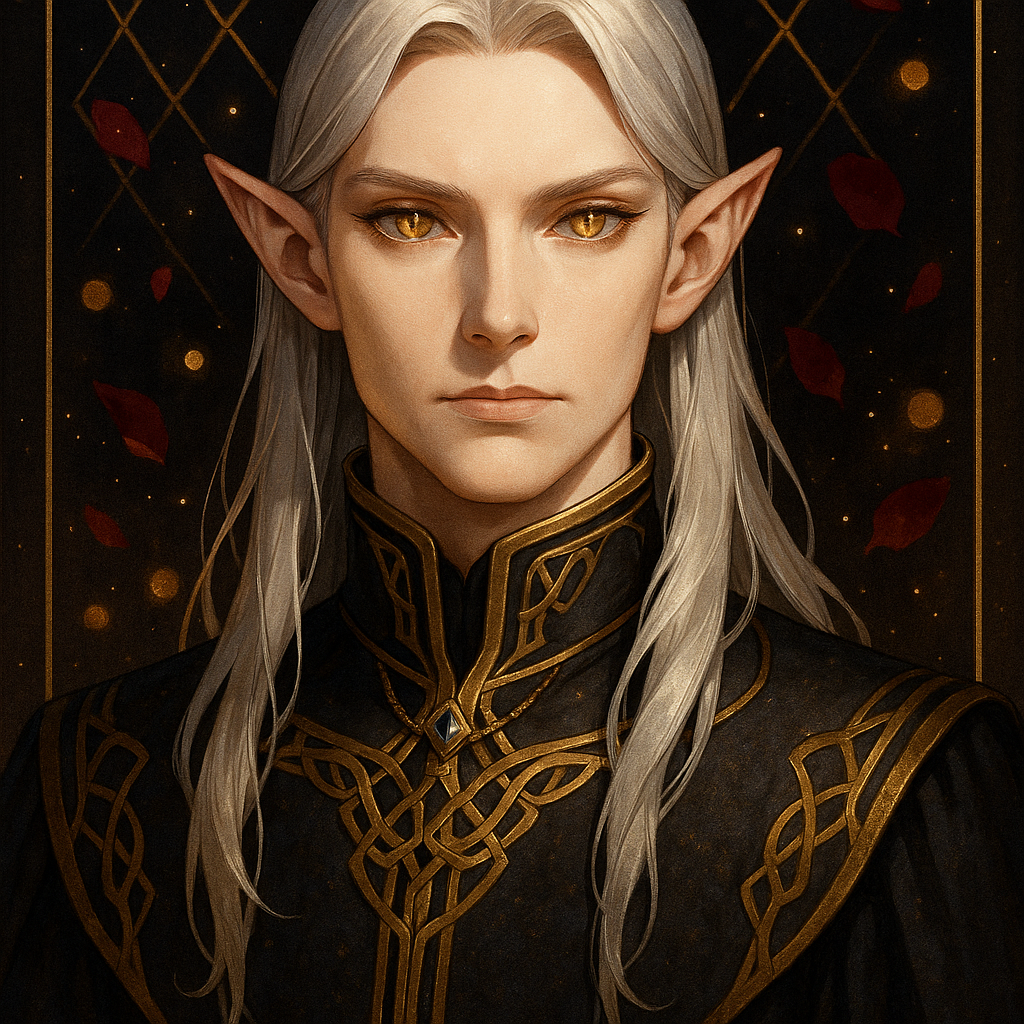
The inner experience of the Elf archetype, whether you are the one holding elven authority or the one yielding to it, is distinctive enough that it is worth describing in some detail. Understanding what this dynamic feels like from the inside is what allows you to recognise whether it fits you and to bring genuine conviction to it.
What It Feels Like to Hold Elven Authority
For the Elf Dom, the inner experience of the archetype is characterized by a particular quality of settled certainty that most practitioners describe as quite different from the forceful or performance-heavy authority of other Dominant styles. The elf does not need to assert their authority; they inhabit it. The quality practitioners aim for is something like the stillness of a person who has been certain about something for so long that the certainty has become structural rather than emotional.
Many Elf Doms describe the experience of stepping into the archetype as a kind of composure that extends into their body: slower breath, deliberate movement, a particular quality of gaze. The elf is not in a hurry because the elf has never needed to be. Cultivating this quality of unhurried certainty is one of the central inner practices of the archetype, and many practitioners find that it has a genuine settling effect on their nervous system within a scene.
There is also a strong aesthetic component to the inner experience for many practitioners. The Elf Dom often experiences the scene partly through the quality of the world they are building: the atmosphere, the precise exchanges, the moments when the fiction holds completely and the scene feels genuinely immersive. This pleasurable craft dimension, the satisfaction of building something aesthetically coherent, is part of what the archetype offers its practitioners.
What It Feels Like to Yield to Elven Authority
For the submissive partner in an elf dynamic, the inner experience is often described in terms of a particular quality of smallness that is distinct from the smallness of, say, a punishment dynamic or a physical restraint scene. To kneel before something ancient and categorically larger than yourself is to feel the disproportion as a kind of relief: your ordinary human scale, with all its pressures and pretences, becomes irrelevant in a way that is profoundly settling.
Practitioners describe a quality of surrender that feels less like giving something up and more like being received by something that does not need anything from you except your genuine presence. The elf's cool certainty, when it is well held, creates a container that is paradoxically warm for the person inside it: you cannot disappoint an entity that has already seen everything, and this can produce a quality of release that is distinct from other surrender dynamics.
The aesthetic dimension of the dynamic also shapes the submissive's inner experience significantly. Being attended to by something of such precision and beauty, being seen and evaluated by a gaze that is genuinely demanding but also genuinely interested, has a particular quality that many submissives find deeply pleasurable. The Elf archetype asks something of its submissive partners: a certain quality of attention and presence that matches the elf's own, and many submissives report that meeting that demand feels genuinely expansive.
Who Tends Toward This Archetype
Elf Dom practitioners very often come from backgrounds in tabletop roleplaying, fantasy literature, or gaming, because these communities have developed the skills of character inhabitation, worldbuilding, and improvisational fiction that the archetype rewards most. This is not a requirement, but it is a recognizable pattern. People who have already practiced embodying a character with coherent internal logic and aesthetics tend to find the Elf archetype accessible in a way that those without that background may initially find more challenging.
A genuine love of aesthetic precision is another common marker. Elf Dom practitioners often care deeply about the quality of objects, environments, and language in their daily lives; the archetype gives a container for that care that is both playful and erotic. People who find sloppy or rushed environments genuinely uncomfortable, and who take pleasure in making things exactly right, often discover that the elf persona names something they have felt for a long time.
On the submissive side, people drawn to elf dynamics often have a particular response to a specific type of authority: not the forceful or aggressive end of Dominant expression, but the cool, assured, aesthetically demanding end. They tend to respond strongly to precision, to the feeling of being evaluated carefully and found adequate, and to the particular charge of yielding to something whose authority is simply given rather than performed.
- Elf Dom tendencies. A love of aesthetic precision; comfort with cool, measured authority rather than demonstrative dominance; often a background in gaming or fantasy literature; satisfaction in worldbuilding and scene craft.
- Submissive in elf dynamic tendencies. Strong response to quiet, assured authority; pleasure in the feeling of being carefully evaluated; attraction to authority that derives from nature or age rather than force; comfort with elaborate rules and protocols.
How to Know Whether This Archetype Fits You
The clearest signal that the Elf archetype fits you is a specific aesthetic and emotional resonance with the qualities it centers: ancientness, precision, cool beauty, a quality of authority or submission that exceeds ordinary human scale. If you find that descriptions of elven authority produce a distinct physical or emotional response, a sense of recognition or longing, that response is worth paying attention to.
For potential Elf Doms, a useful question is whether the quality of deliberate, unhurried certainty is one you can access genuinely or whether it requires significant performance effort. The archetype is sustainable when its core qualities are genuinely present in the practitioner's personality and can be amplified rather than manufactured entirely from scratch. People who are naturally deliberate, precise, and aesthetically exacting tend to find the archetype a natural extension of themselves.
For potential submissive partners, the question is whether the specific quality of elven authority, cool, ancient, demanding but not aggressive, produces the kind of resonance that other Dominant archetypes do not. Many people who have found conventional Dominant expression either too aggressive or not aesthetically rich enough discover that the Elf archetype meets something they could not quite name before encountering it.
Exercise
The Resonance Inventory
This exercise helps you locate your genuine emotional and aesthetic response to the archetype rather than a theorised or hoped-for one. Work through it slowly and honestly.
- Read the four typical quotes from the Elf archetype on sak.red slowly, one at a time, and notice your physical and emotional response to each. Are you drawn to speaking those words, or to hearing them? Does one quote produce a stronger response than the others?
- Bring to mind a specific moment from a book, game, or film in which an elven character held authority in a way that affected you. Describe that moment in a few sentences and identify what specifically moved you about it.
- Ask yourself honestly whether the quality of unhurried, settled certainty is something you can access in yourself, even briefly, or whether it requires conscious construction. There is no wrong answer, but the honest one is useful.
- Write a short paragraph from the point of view of either the Elf Dom or their submissive partner in a scene you imagine clearly. Notice whether writing it produces genuine engagement or feels like a technical exercise.
Conversation starters
- When you imagine the Elf archetype working at its best, what is the quality of the scene that makes it work? What is the specific feeling you are looking for?
- Is there a particular cultural version of elves, from a specific book, game, or tradition, whose qualities you feel most drawn to embody or to submit to?
- What does the idea of yielding to something genuinely beyond ordinary human scale bring up for you, emotionally and physically?
- If you have been in a power exchange dynamic before, how does the quality of authority in those experiences compare to what you imagine elven authority would feel like?
- What aspects of your own personality do you see reflected in the Elf archetype, and which feel like a reach?
Ways to connect with a partner
- Each of you reads the role description for the Elf on sak.red independently and then shares what two or three things resonated most strongly, without trying to match each other's answers.
- Try a brief exchange in which one of you uses the language of the archetype, the elf's characteristic patience, measured tone, and aesthetic precision, and both of you notice how it shifts the emotional register of the interaction.
- Discuss what specific elven tradition you would both be drawing from if you built a scene together, and what two or three concrete aesthetic elements would need to be present for the fiction to hold.
For reflection
What does the specific quality of authority or surrender that the Elf archetype offers give you that other dynamics have not, or that you have not yet found?
The inner experience of this archetype is real before the first scene, in the quality of resonance you feel when you encounter it honestly. That resonance is worth trusting.