
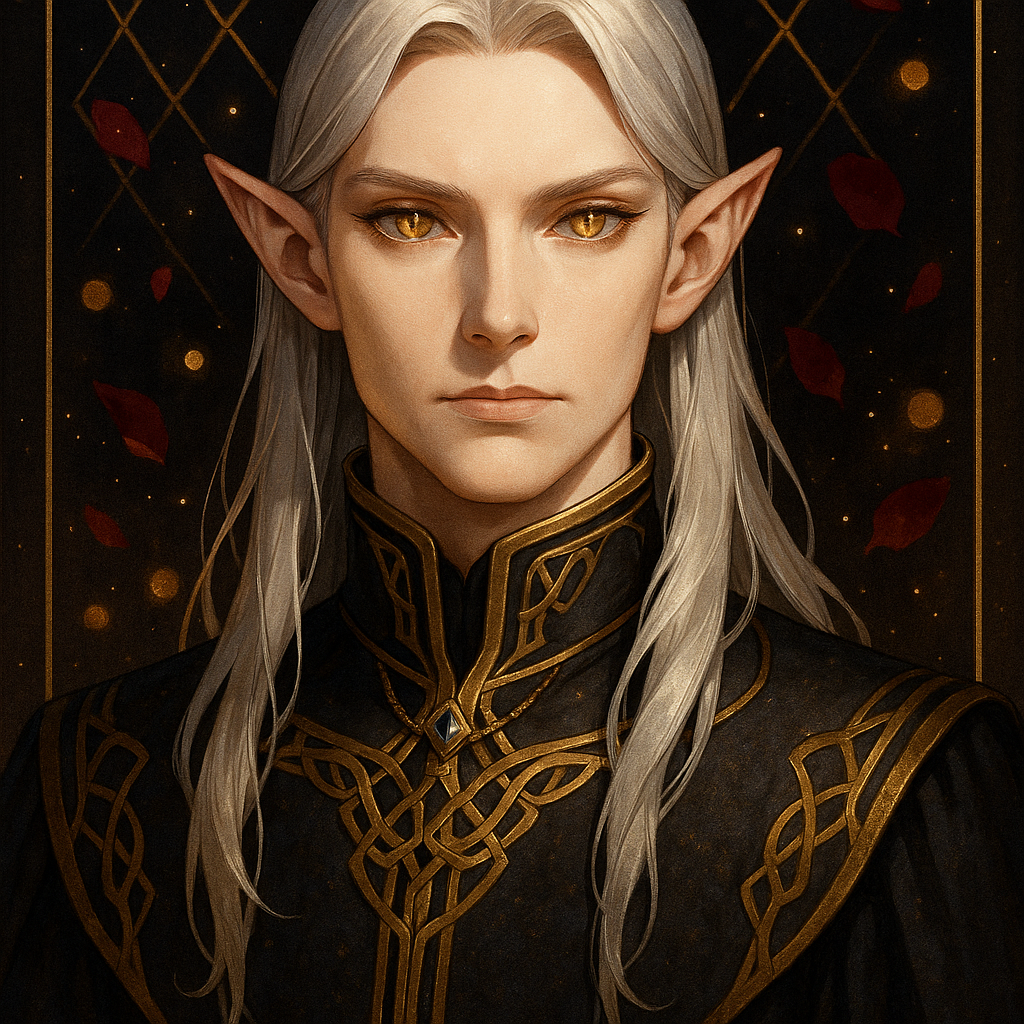
The Elf archetype occupies a singular position in BDSM roleplay because it combines the most aesthetically rich traditions of high fantasy with a quality of authority that no human archetype quite replicates. Understanding what makes that combination work, and what distinguishes it from other Dominant archetypes, is the foundation of everything that follows.
What the Elf Archetype Is
The Elf is an otherworldly Dominant: ancient, beautiful, and in possession of authority that derives not from force or social position but from age, nature, and an almost categorical difference in kind. In the fiction of the scene, the elf has existed for centuries; they have watched empires rise and dissolve; they have patience on a scale that makes ordinary human urgency look like noise. The submissive or lesser being kneeling before them feels not merely the weight of one person's authority but something that dwarfs individual human scale entirely.
This is the specific psychological appeal of the archetype. Many Dominant roles offer power, but the Elf offers power of a different order: not power acquired through effort or position, but power that is simply a fact of what the elf is. For submissives who are drawn to a quality of authority that exceeds ordinary human categories, this disproportion is exactly the point.
The Elf is a Dominant archetype in its most common expression, though some practitioners explore the fairy-adjacent, more capricious forms of elven power in a switch capacity. The core of the archetype across those variations is the same: cool certainty, aesthetic refinement, and a quality of timelessness that reshapes the entire emotional atmosphere of a scene.
High Elf and Dark Elf: Two Distinct Traditions
The most useful first distinction within the archetype is between the high elf and the dark elf, two traditions that produce significantly different dynamics. The high elf, drawing from Tolkien's Noldor, the Eldar of Warhammer, and similar traditions, tends toward formal, cold authority: court protocol, exacting standards, a quality of imperious stillness in which the raised eyebrow does more work than the raised voice. High elf scenes often involve elaborate rules of address and conduct, formal titles, and a kind of ceremonial precision that makes every exchange feel weighted.
The dark elf, drawing from the Dunmer of Morrowind, the Drow of D&D, and related traditions, offers a more seductive and morally ambiguous power. Where the high elf commands through dignity and ancient rank, the dark elf commands through a combination of beauty, cunning, and a quality of danger that makes obedience feel less like deference and more like genuine self-preservation. Dark elf dynamics often have an edge of seduction and treachery that is absent from the cooler high elf frame.
Practitioners developing an elf dynamic often begin by deciding which tradition they are drawing from, because the two produce scenes with genuinely different emotional textures. Many also develop hybrid aesthetics that combine elements of both traditions, or draw from other sources entirely: the elves of World of Warcraft, the Sindarin of Tolkien's Middle-earth, or the wood elves of various fantasy gaming traditions each offer distinct possibilities.
- High elf: formal court protocol, cold authority, exacting standards, imperious stillness
- Dark elf: seductive power, moral ambiguity, danger and cunning alongside beauty
- Wood elf: wilder, more instinctive authority tied to nature and ancient forest knowledge
- Hybrid aesthetics: combining traditions to develop a persona that is specific to the practitioner
Where This Archetype Sits in BDSM
The Elf archetype sits within the Roleplay and Fantasy category of BDSM dynamics, which means that the fictional frame is not incidental but structural: it does not simply add flavour to an otherwise conventional Dominant dynamic but fundamentally changes the nature of the authority at play. The submission being offered to an Elf Dom is submission to a fictional entity with specific qualities, and the erotic charge of that submission depends on the shared fiction being maintained with some consistency.
This places elf roleplay in conversation with other high-immersion fantasy dynamics: the creature dynamic, the god or deity archetype, the fae or fairy dynamic, and the monster Dominant tradition. What distinguishes the Elf from these neighbours is the specific cultural richness of the source material. Centuries of fantasy literature, decades of gaming, and a substantial contemporary creative community have developed elven culture, language, and aesthetics to a degree that gives Elf Dom practitioners an unusually rich vocabulary to draw from.
The archetype also shares territory with more general protocol-based dynamics, particularly where high elf court protocol is concerned. Practitioners who enjoy formal rules of address, precise conduct expectations, and the kind of authority that is expressed through exacting standards rather than physical domination often find the Elf archetype a natural home for those interests.
What the Archetype Is Not
The Elf archetype is not simply a costume placed over a generic Dominant dynamic. The elven quality of the authority, its ancientness, its cool remove, its aesthetic precision, is not decorative but functional: it changes what the submission feels like and what the Dominant is being asked to embody. Practitioners who treat the elf as a surface aesthetic without developing the specific inner qualities the archetype asks for tend to find that scenes fall flat.
The cool, remote quality of elven authority is also not emotional unavailability. The most compelling Elf Doms are those whose ancient certainty is grounded in genuine care for their partner. The archetype's shadow side is the risk of using the elf's aesthetic distance as a way to avoid real emotional presence in a dynamic, and this is worth naming clearly from the beginning. Elven dignity is not a substitute for the genuine connection that makes power exchange meaningful.
Finally, the archetype does not require extensive knowledge of any specific fantasy tradition to begin. Many practitioners develop their elven persona gradually, drawing on sources they already know and adding depth over time. A sense of precision, patience, and aesthetic care is a more useful starting point than encyclopedic knowledge of Tolkien's Quenya language.
Exercise
Define Your Elven Tradition
Before building a scene or approaching a partner, it helps to sketch the broad outlines of the elven identity you are drawn to. This exercise is generative rather than definitive: you are not committing to a permanent persona but exploring what resonates.
- Write down three or four fantasy sources, whether books, games, films, or art, whose version of elves has appealed to you. Note one or two specific qualities from each that you find compelling.
- Based on those notes, place yourself somewhere on the spectrum between high elf formality and dark elf seductive ambiguity. You do not need to commit to one tradition exclusively; identify where your centre of gravity is.
- Write two or three sentences describing the basic qualities of your elven persona: roughly how old they are, what tradition or culture they come from, and what their relationship to authority looks like.
- Identify one concrete aesthetic element you could bring to a scene right now, whether that is a specific way of speaking, a piece of clothing, a quality of posture, or a particular form of address.
Conversation starters
- Which fantasy tradition's version of elves speaks to you most, and what specifically appeals about that tradition's take on elven authority?
- When you imagine an elf dynamic, are you drawn more to the formal ceremonial end or the seductive, morally ambiguous end?
- What does yielding to something genuinely beyond ordinary human scale feel like as an idea? Is the scale disproportion part of the appeal for you?
- Have you ever encountered the Elf archetype in a non-kink context, through gaming, literature, or cosplay, and brought something from that experience into your sense of what this dynamic could be?
Ways to connect with a partner
- Share your elven tradition worksheet with a potential partner and ask them to do the same exercise from the submissive perspective, describing what kind of elven authority they are drawn to.
- Watch or read a fantasy source you both know and discuss which specific scenes or character moments capture the quality of authority or submission you are most interested in.
- Try a brief, low-stakes exchange in which you use a formal title or specific form of address drawn from your elven persona, and notice how the shift in register changes the feeling of the interaction.
For reflection
What is it about authority that exceeds ordinary human scale that appeals to you, and what does that tell you about what you are looking for in a dynamic?
The Elf archetype rewards practitioners who are willing to invest in the fictional frame rather than treating it as decorative. The work of this course is building that investment one layer at a time.