
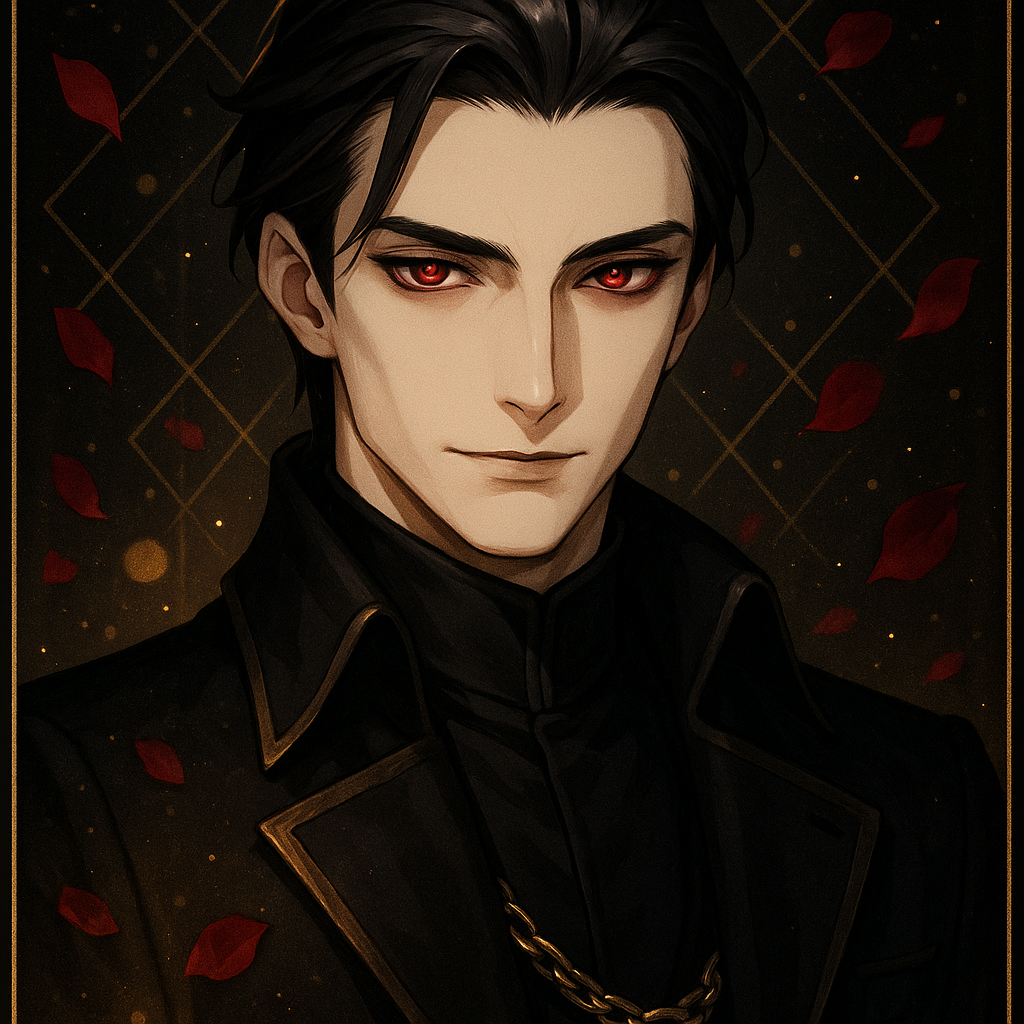
The Villain Dom brings fictional menace and moral complexity into consensual BDSM roleplay: inhabiting the figure the genre calls the antagonist, the dangerous one, the character whose power exceeds what is sanctioned. This first lesson introduces what the role involves, where it comes from in culture and in kink, and how fiction and consent operate together in this kind of play.
What the Villain Dom Does
The Villain Dom embodies a fictional character whose defining quality is menace: some form of power, threat, or moral ambiguity that makes them compelling and dangerous within the story. In consensual kink, this character is brought to life in a container where the fiction holds and the safety holds simultaneously. The partner experiences the immersive sensation of being menaced by someone genuinely compelling, while both people remain in a relationship where consent, negotiation, and aftercare are fully intact.
The specific character varies enormously. The Villain Dom might embody a cold, calculating figure whose control is absolute and whose warmth, if any, is entirely on their own terms. They might inhabit a passionate and dangerous character whose intensity is the threat. They might be a world-weary authority who has decided that the rules no longer apply to them, or a genuinely tender presence whose tenderness is inseparable from their menace. What they share is the quality of the fictional villain: a compelling darkness that the partner has specifically asked to encounter.
This is not improvisation; it is a craft practiced within a negotiated container. The fiction is deliberately constructed before it begins: the type of character, the degree of intensity, the specific content that is and is not part of the scene, and the mechanisms for stepping out of it when needed. The Villain Dom commits to the fiction fully within those parameters, then returns to their genuine self, with full warmth, at the scene's end.
Where This Role Comes From
The Villain Dom role draws on one of the most persistent features of human storytelling: the appeal of the compelling antagonist. Across gothic novels, dark romance, fairy tales, and contemporary fiction, the morally complex love interest, the character who operates outside the bounds of what is permitted, and the figure whose danger is inseparable from their appeal has generated strong reader and audience response. This is a documented and widely discussed phenomenon, not a niche preference.
In BDSM culture, the appetite for this kind of roleplay reflects the same deep engagement with dark narrative that fiction has always served. The specific subgenre of dark romance, which has generated significant community discussion about what makes morally grey characters compelling and why encountering them in fiction produces the responses it does, provides useful context for understanding why the Villain Dom role exists and why it finds willing partners.
The community has developed shared understanding of what distinguishes the fictional encounter from anything endorsing real-world harm. The key distinction is consistently stated: the appeal of a fictional character exists within a framed, consensual, and explicitly constructed context, and everything about the Villain Dom role is built on the clarity and solidity of that frame. Thoughtful practitioners in this area have articulated this clearly and at length, and the literature of dark romance communities contains sophisticated discussion of it.
Fiction and Consent Together
The specific challenge of Villain Dom play, and what distinguishes it from other forms of dominance, is that it requires simultaneously committing to a fiction and maintaining the reality. The Villain Dom commits to the character fully enough that the fiction is convincing, which is what the partner is seeking. They also maintain enough awareness of the real relationship to respond to safewords, to recognize when something has shifted from wanted to unwanted, and to step out of character cleanly and completely when it is needed.
These two requirements are not in contradiction, but managing both at once does take practice and self-awareness. Many experienced Villain Doms describe it as holding two things simultaneously: the character they are inhabiting and their own genuine self and care for their partner underneath it. Neither is lost during the scene; they are held together, with the fiction in front and the real relationship securely beneath.
This dual awareness is what makes the Villain Dom role a specific skill rather than simply a permission to be intense in a scene. Anyone can be intense. The Villain Dom is specifically practicing the craft of convincing fiction within a container of genuine care, and the quality of both is what makes the role work. The clearer and more solid the real relationship underneath the fiction, the more convincing and satisfying the fiction itself can become.
Exercise
Mapping the Character and the Container
This exercise helps you think concretely about what kind of Villain Dom character you are drawn to and what kind of container that character requires to be played well and safely.
- Write two sentences describing the type of villain character you are most drawn to embodying. Be specific about the quality of the menace: cold, passionate, tender-beneath-it, world-weary, or something else.
- Write one sentence about what you believe your partner wants to experience from this character, based on what they have expressed.
- Write down two things that would be in bounds for this character, and two things that would be out of bounds, as specific to this character type as you can make them.
- Write one sentence about how you would step out of character if something in the scene required you to return to yourself fully.
- Write one sentence about what the relationship looks like immediately after the scene ends, when the character is entirely gone.
Conversation starters
- What type of villain character is most compelling to you as a role to inhabit, and what draws you to that specific quality of darkness?
- How do you understand the relationship between the character you play and the person you actually are, and where do they connect and diverge?
- What does the container around the fiction look like to you, and what elements of it do you consider non-negotiable?
- How do you currently manage the dual awareness of being in character and maintaining genuine care for your partner simultaneously?
Ways to connect with a partner
- Describe the villain character you are drawn to embody and ask your partner what villain character they most want to encounter, then discuss where these align.
- Establish together what the signal for 'I am speaking as myself now, not the character' looks and sounds like, so both of you have access to it.
- Discuss explicitly what the relationship looks like immediately after a villain scene ends, including what each of you needs in that transition.
For reflection
When you imagine inhabiting a villain character with full commitment, what is it in that practice that you find most compelling, and what does that tell you about what you are bringing to the role?
The Villain Dom role is a specific craft, and it begins with understanding clearly what the character is, what the container is, and what the real relationship underneath both looks like. Everything else builds from that foundation.