
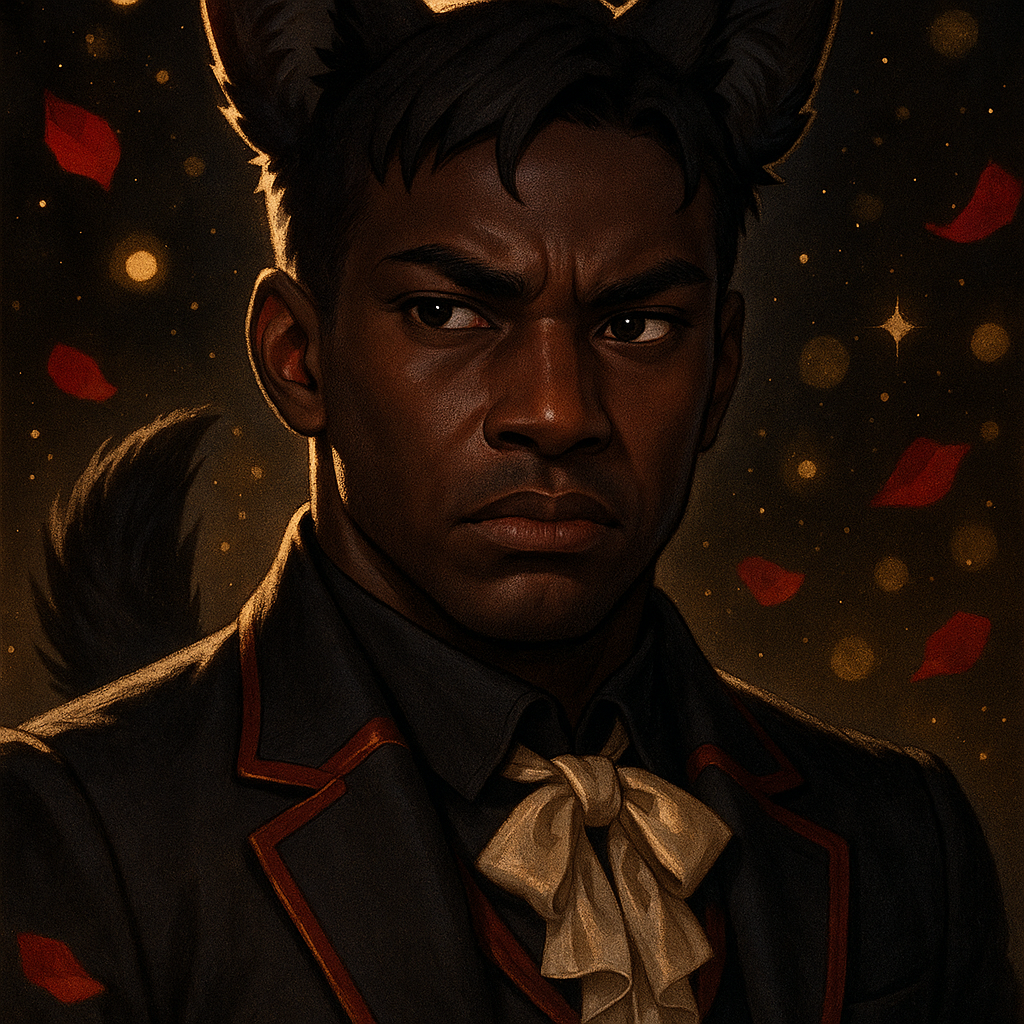
Guard dog practice is built from specific rituals, the deliberate structure of on-duty and at-ease states, and scene designs that give the protective instinct a proper form and context. Knowing what those look like concretely makes them possible to build well.
Entry rituals and the on-duty signal
How a guard dog session begins matters as much as the content that follows. The entry ritual, including the gearing up that marks the dog's transition into their persona and the handler's on-duty signal that begins the session formally, establishes the frame that everything else operates within. Consistency in this entry is important: the same signal, delivered the same way, reliably produces the same quality of attention shift that makes the headspace accessible.
Gear for the guard dog tends toward the serious and functional rather than the playful: darker colors, heavier collars or harnesses, gear that communicates capability rather than cuteness. The dog's physical bearing within the persona, the settled alertness, the wide attention, the deliberate positioning, is itself a form of gearing up that happens alongside the physical gear. The full entry into the guard dog headspace involves both the external and the internal dimension, and entry rituals that address both tend to produce more complete access to the persona.
Handlers who design the entry ritual thoughtfully, who treat the on-duty signal as a meaningful formal moment rather than a casual verbal cue, give their dog a clear starting point that supports the headspace. The handler's own physical bearing during the entry matters too: a handler who signals on-duty with evident seriousness and intentionality activates their dog's protective alertness more completely than one who is casual about it.
On-duty behaviors and patrol
The specific behaviors of the on-duty state are things that can be practiced and refined. Patrol, the deliberate movement around the perimeter of a defined space with the purpose of assessing and reporting back, is a core guard dog behavior that can be structured quite specifically: the handler defines the patrol area, the dog moves through it with deliberate attention, and a simple reporting signal communicates that the patrol is complete and the area is clear.
Positioning behaviors are also part of the on-duty vocabulary: the guard dog placing themselves between the handler and a door, or between the handler and an unfamiliar person in a negotiated scenario, is a specific behavior that both parties can practice and refine. The dog's body language during positioning, deliberately watchful, physically solid, communicating capability through bearing alone, can be developed over time.
Moments of reporting back to the handler, checking in with a specific look or a touch of the hand, are an important part of maintaining the connection within the on-duty state. The guard dog who patrols entirely independently, without any contact with the handler, loses the relational dimension that makes this identity what it is. The regular, brief check-ins that maintain the handler connection are part of what distinguishes this from simply being alert in a room.
At-ease scenes and vulnerability
The at-ease dimension of guard dog play is as important to develop deliberately as the on-duty dimension. A vulnerability scene, structured specifically around the handler giving the at-ease signal and the dog receiving genuine rest, affection, and tenderness, can be the most intimate and moving experience the dynamic produces. Many practitioners describe these moments as more significant, in retrospect, than any protective scenario.
The structure of an at-ease scene is in some ways the inverse of the on-duty scene: rather than wide attention and physical alertness, the dog is invited into narrowed attention focused on the handler, physical relaxation, and the reception of care rather than the provision of it. This transition can be difficult for guard dogs whose vigilance is strong, and handlers who are patient with the transition, who maintain warmth and gentleness while the dog's nervous system genuinely settles, produce more complete at-ease states than those who expect the switch to happen immediately.
- A formal on-duty session where the guard dog patrols a defined space and provides patrol reports to their handler, with clear protocol throughout
- A vulnerability scene structured entirely around the at-ease state: the handler signals down-time and the dog receives rest, affection, and genuine tenderness
- A threat-response roleplay within a fully negotiated scenario where the guard dog's protective instinct is specifically engaged and then resolved cleanly
- A community event attendance where both parties navigate the on-duty and at-ease balance in a social context with pre-discussed parameters
Exercise
Designing your first guard dog session
This exercise walks you through the specific decisions that go into planning a first guard dog session so that both parties enter it with shared expectations.
- Define the session's setting: where it will take place, what the patrol area will be if patrol behaviors are included, and what environmental factors will support the guard dog headspace.
- Write out the entry ritual: the gearing sequence, the on-duty signal, and the handler's behavior at the start of the session that establishes the formal beginning.
- Decide whether this session will include an explicit at-ease period, and if so, what that transition will look like: the signal, the handler's approach during the transition, and what the at-ease period will involve.
- Plan the session's close: how it will end, what the exit ritual looks like, and what aftercare will follow.
- Share the plan with your handler and adjust based on their input before committing to a date.
Conversation starters
- What specific on-duty behaviors feel most central to your guard dog persona, and which do you want to develop first?
- What does the at-ease period in your dynamic look like when it is going well, and what makes it possible for you to genuinely relax?
- How do you want your handler to signal the at-ease state, and what do you need from them during the transition into that state?
- What gear feels right for your specific guard dog persona, and how does wearing it contribute to the headspace?
Ways to connect with a partner
- Practice the patrol behavior in a low-stakes context, with the handler defining a space and the dog moving through it and reporting back, before including it in a full session.
- Design the at-ease scene specifically: what the handler does to invite the dog into rest, how long the transition typically takes, and what both parties want from the at-ease period.
- Debrief after your first full session about what the on-duty and at-ease states each felt like, and what you want to adjust for next time.
For reflection
What would it mean to inhabit both the fierce on-duty state and the private, tender at-ease state fully, without diminishing either one for the sake of the other?
A first guard dog session done with clear structure and genuine shared understanding gives both parties the real experience of what the dynamic offers. Start with the ritual; the depth builds from there.