
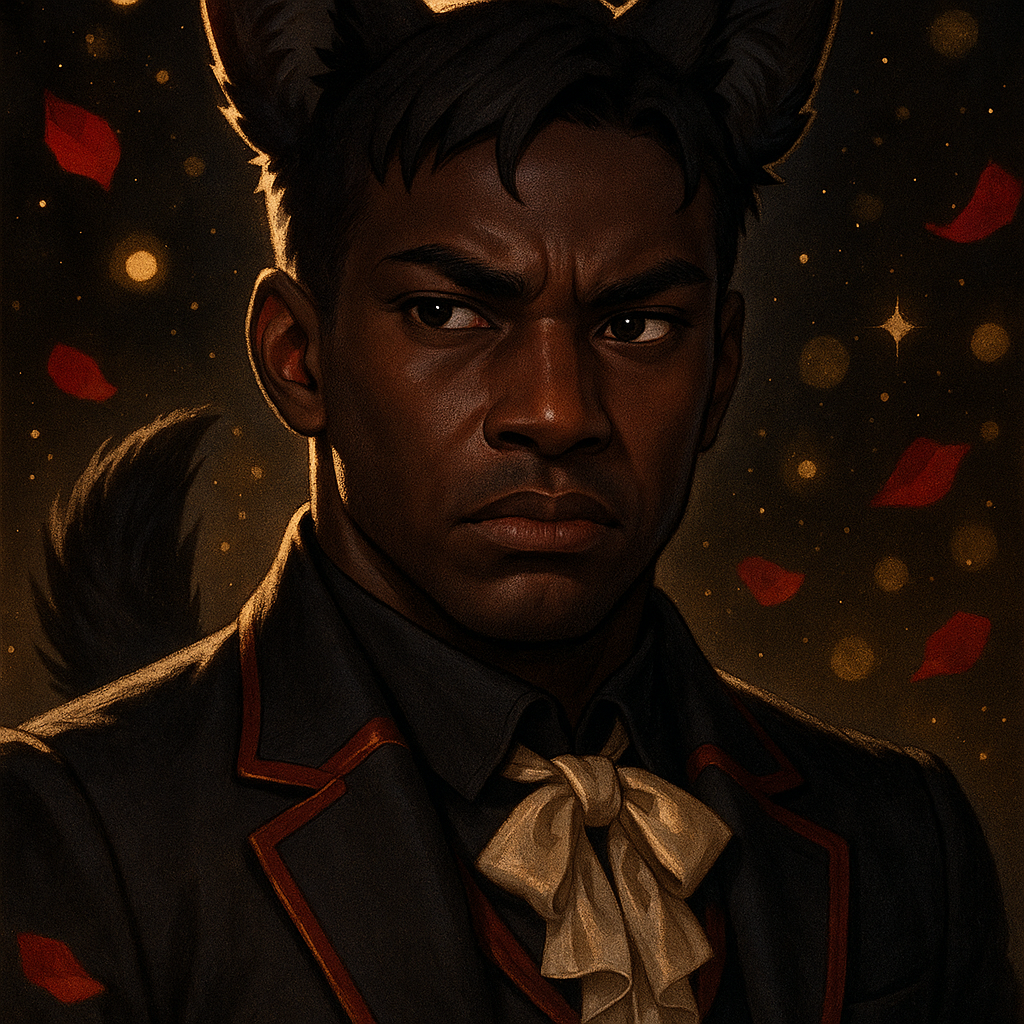
The guard dog persona is not simply a way of feeling; it is something a person develops through specific practice. Understanding what the role asks you to build, in terms of awareness, calibration, and the capacity for genuine rest, makes the dynamic richer and more sustaining for both parties.
Calibrating the protective instinct
The most important skill a guard dog develops is calibration: the ability to distinguish genuine signals that require protective response from the heightened alertness that can come from the role's orientation toward vigilance. A guard dog whose protective instinct is always at maximum, who interposes themselves or goes into alert mode in every mildly unfamiliar situation, is not serving their handler well; they are exhausting themselves and creating noise that makes genuine alerts less legible.
Calibration requires learning to read the actual environment against the handler's own assessment of it. A guard dog who trusts their handler's read of a situation, who can feel that their handler is relaxed and comfortable and update their own state accordingly, is demonstrating the kind of calibrated responsiveness that makes the dynamic functional rather than merely theatrical. This is a skill, not a given, and it develops through practice and through genuine communication with the handler about what levels of alertness are appropriate in different contexts.
Handlers contribute to calibration by being consistent and readable in their own signals. A handler who sends unclear signals about when the dog should be vigilant and when they can stand down creates a dog who defaults to high vigilance as the safe choice. Handlers who are deliberate and clear about the at-ease signal, and who use it reliably when the situation is genuinely safe, give their dog the information needed to calibrate accurately.
The skill of genuine rest
Receiving the at-ease signal and actually standing down, fully and not partially, is a specific skill that guard dogs develop over time. The impulse to maintain some level of background vigilance even in explicit at-ease moments is strong for people whose protector drive is genuine rather than performed. Learning to trust that the handler's signal is accurate, that the situation is genuinely safe, and that the dog's full recovery and rest are things the handler wants and values, takes practice.
This is not merely a technical exercise; it is a trust skill. The guard dog who can stand down fully when their handler signals at ease is demonstrating the same quality of chosen trust that defines their on-duty devotion. The handler who can be trusted to signal accurately, who does not send at-ease signals when vigilance is still needed, earns the dog's genuine rest. These two things, the dog's capacity for full recovery and the handler's trustworthiness in the at-ease signal, develop together.
For guard dogs who have a genuine personal history of hypervigilance or difficulty resting, the at-ease practice within the dynamic can be therapeutic in its orientation: it is a specific, bounded context in which the protector drive has an explicit off switch, and practicing using that switch is itself meaningful work. This is one of the ways the guard dog persona can function as more than play, though it remains, importantly, a consensual and bounded context rather than therapy.
The mindset of chosen devotion
The guard dog's fundamental mindset quality is the clarity of chosen loyalty. The dog has selected their handler specifically, has assessed them and found them worth protecting, and has given their protective capacity to that person as a deliberate act of devotion. This clarity of choice is what distinguishes the guard dog's protectiveness from obligatory service: the dog is not protecting their handler because they have no alternative but because they have evaluated the handler and chosen to give them everything they have.
This mindset requires the guard dog to have a genuine sense of their own assessment capacity: to know that their judgment is sound, that their choice is considered, and that the handler who has their loyalty has earned it. Guard dogs who approach their protective instinct from a place of genuine competence rather than desperate need produce dynamics that have a quality of dignity and intentionality that is one of the identity's most appealing characteristics.
Finally, the mindset of the guard dog includes a particular form of patience with the handler's management of situations. There will be times when the dog reads a situation as requiring a protective response and the handler's assessment differs. The guard dog who can express that concern through available channels and then defer to the handler's judgment, trusting the handler's broader view of the situation, is operating the dynamic correctly. This deferral is itself an expression of the trust that defines the relationship.
Exercise
Practicing the transition
This exercise builds the on-duty to at-ease transition as a deliberate skill, so that it functions reliably within a session rather than requiring effortful management.
- With your handler, agree on a specific at-ease signal: a word, a gesture, or a physical touch that will mean you are explicitly permitted to relax, receive affection, and stop scanning.
- Practice the transition in a low-stakes setting: the handler gives the on-duty signal, you enter alert awareness for two minutes, then the handler gives the at-ease signal and you practice fully relaxing your vigilance.
- Notice what makes it difficult to stand down fully, whether that is physical tension, background alertness, or a sense that relaxing is somehow risky or irresponsible within the dynamic.
- Discuss those difficulties with your handler and together adjust the at-ease practice until the transition feels genuine rather than performed.
- After your next full session, reflect on whether the at-ease moments felt like genuine rest or like maintained readiness with a quieter surface.
Conversation starters
- What makes it difficult for you to fully stand down when your handler signals at ease, and what would make that transition more genuine?
- How do you know when your protectiveness is calibrated to the actual situation versus when it is running at a level the situation does not require?
- What does your handler's trustworthiness in the at-ease signal look like, and do you currently trust it fully?
- What does the guard dog's chosen devotion give you that obligation or habitual protectiveness does not?
Ways to connect with a partner
- Map together the specific situations and environments in which on-duty, medium alertness, and at-ease are appropriate, so both parties have a shared understanding of what calibrated vigilance looks like.
- Practice the at-ease transition until both parties feel that the dog's relaxation is genuine rather than partial, and discuss what made the difference.
- Ask your handler to describe what it feels like when the guard dog is fully in the at-ease state, and whether that is different from a partially relaxed state in ways they can name.
For reflection
What is the difference between choosing to protect someone and feeling compelled to, and what does that distinction tell you about the guard dog mindset?
The skills the guard dog develops, calibration, genuine rest, chosen devotion, are not separate from the identity; they are its substance. Building them deliberately makes the dynamic both richer and more sustaining for everyone involved.